AKA La Casa Con La Scala Nel Buio
Director: Lamberto Bava
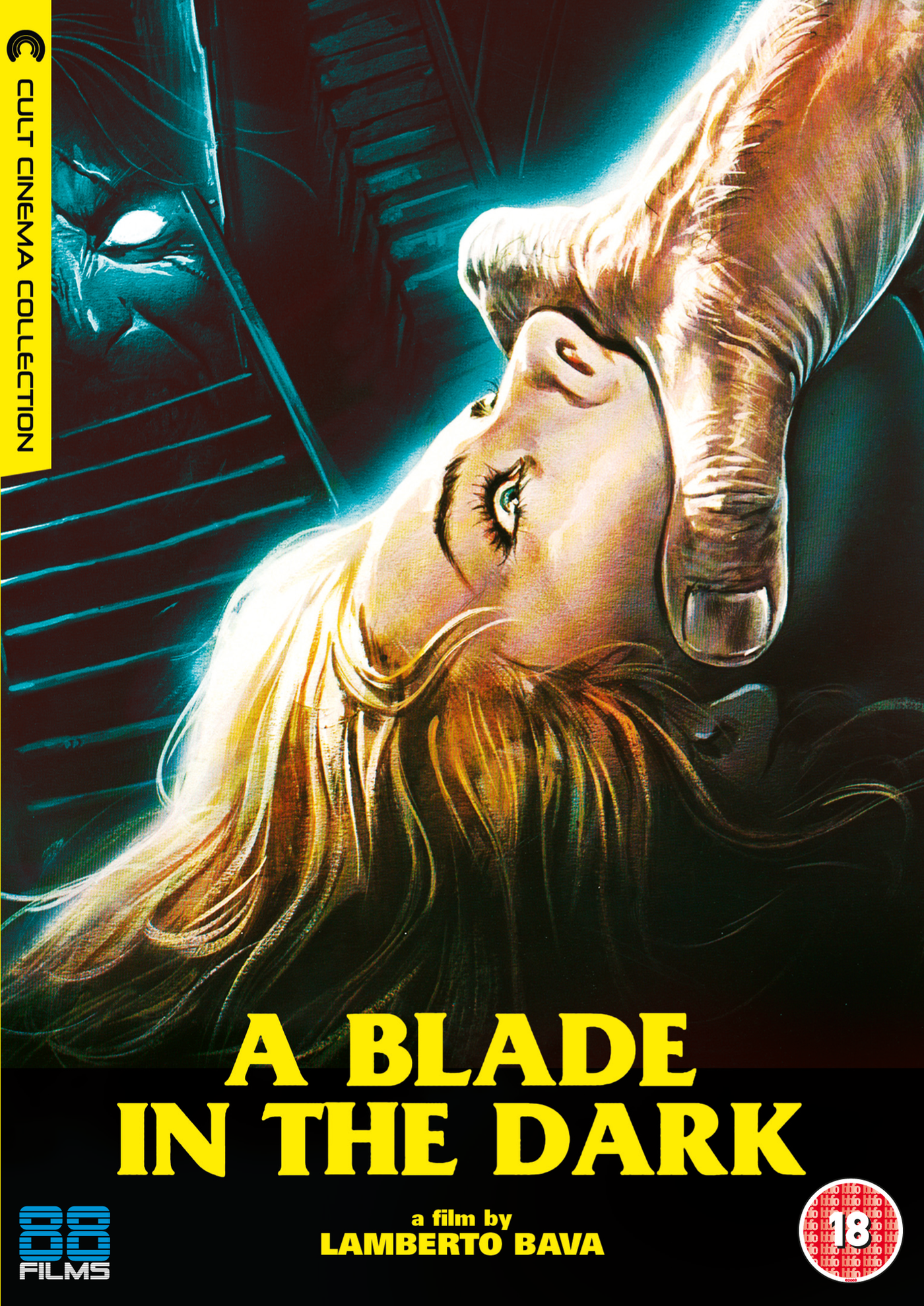
As you may have noticed, Italian horror cinema is quite distinctive, but none more so than the “giallo” subgenre.
I’m not going to go into the history of giallo, as there are plenty of books and webpages that can give you that. Instead, I’m going to give you my own interpretation of what makes a giallo film.
Lots of giallo films have long titles; not all, but quite a few, and some of them are very pleasing (“Your Vice Is A Locked Room And Only I Have The Key” is a personal favourite of mine). There may be an animal in the title as well, such as “The Bird With The Crystal Plumage” or “Seven Deaths In The Cats Eye”. If not, there might be an animal in the film for seemingly no reason, like a character being chased by a dog, for example. There needs to be a serial killer that is shrouded in mystery and only revealed in the final stages of film. Along the way, there will be various red herrings, which I have to say, I get suckered in by every time (but my wife often spoils this for me and guesses the killer and the twist within the first few scenes. It’s a skill). Often the killer is a character we were introduced to early on in the film and forgotten about by the third act. Nudity and bloodshed are commonplace and many of the kills are shown from the point of view of the killer (a technique later used heavily in the slasher genre, which owes a great debt to Italian horror cinema). Lighting also plays a large part; many giallo films utilise bold colours to aid in visual storytelling. The films often have fantastic posters too, which, to my eyes, are pieces of art.
Mario Bava is often credited as being the man behind many of the first giallo films, starting with “The Girl Who Knew Too Much” but it is Dario Argento who really kept pushing the subgenre into the 70s/80s and beyond. Today though, I want to highlight a giallo film which I feel should be mentioned in the same breath as classics of the genre like “Deep Red”, “Don’t Torture A Duckling” and “Tenebrae”, but is often over looked.
“A Blade In The Dark” was released in 1983 and the second film to be directed by Lamberto Bava (following his macabre debut, erm… “Macabre”.) Lamberto had a wealth of experience under his belt at this point though, having worked closely with his father, Mario Bava, on many films acting as assistant director. He also worked with Ruggero Deodato and Dario Argento, so it is no surprise that he manages to turn in a masterfully crafted film here.
“A Blade In The Dark” was written by Dardano Sacchetti and his wife, Elisa Briganti. Dardano Sacchetti is a name you may recognise already, as he co-wrote Lucio Fulci’s film “City Of The Living Dead” – and you are going to hear a lot more of him here at the homepage of horror! Sacchetti has penned what I feel are some of the high points in the 70s/80s Italian horror boom, including what is probably Lamberto Bava’s biggest hit, “Demons”. Sacchetti also wrote the criminally underrated prequel/sequel to “The Amityville Horror” – “Amityville II: The Possession”, which also has an Italian director, so maybe I can get away with reviewing that on here at some stage too.
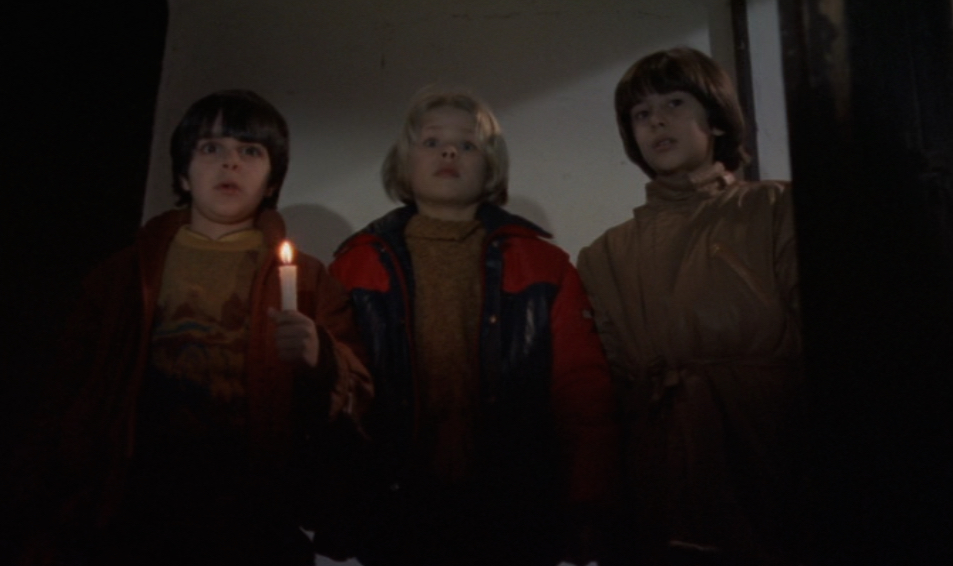
“A Blade In The Dark” starts in the best possible way… with Bob from “House By The Cemetery”! Ok, it’s not actually the same character, but it is the same actor, Giovanni Frezza, and his character is credited as “young boy in film clip”, so I’m going to pretend his name is Bob.
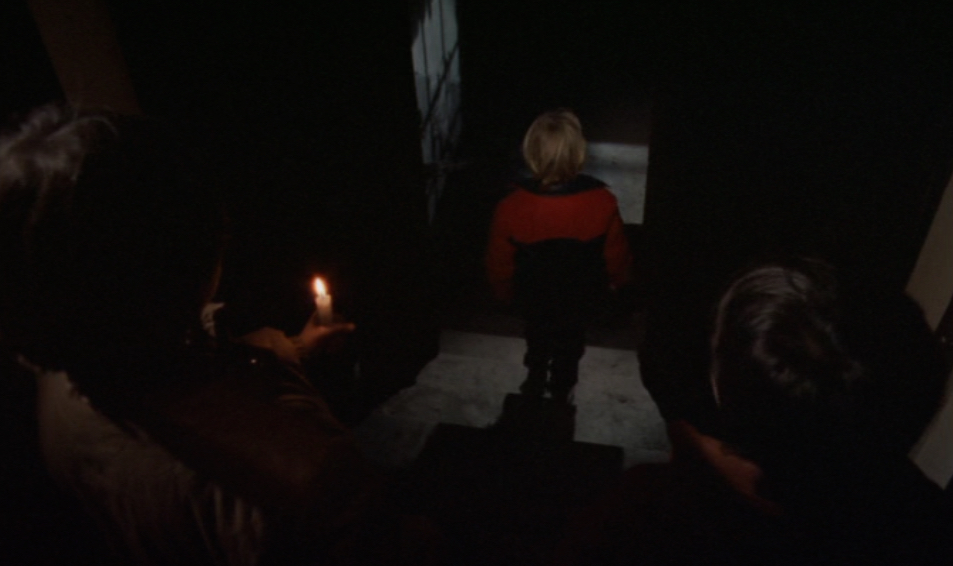
Bob is being forced by a pair of bullies to go to collect a tennis ball which they have thrown down into a dark, gloomy basement. If Bob doesn’t, the boys will continue to call Bob a female. “Female, you’re a female” the boys chant repeatedly (and this is irritatingly catchy) until Bob makes his way down the long staircase. As Bob disappears out of view, the two boys at the top of the stairs hear him scream and the ball is suddenly thrown out of the darkness, up the stairs, covered in blood, prompting the boys to flee – cue credits!
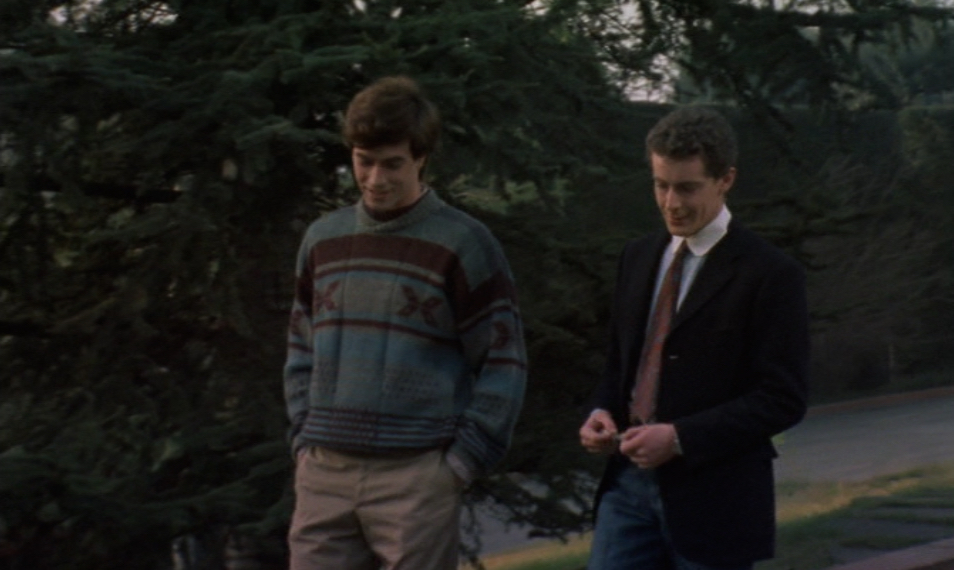
We are then introduced to Bruno (played by Andrea Occhipinti – probably most famous for his role in Lucio Fulci’s “The New York Ripper”) and Tony (played by the amazing Michele Soavi, who also serves as assistant director). Bruno is a musician and is staying in a villa out in the countryside so he can focus on writing music for a film his friend Sandra is directing. Tony, the landlord of the villa, is keen to hear some of the music that Bruno is working on, as he likes the music in giallo films! The man has good taste! Bruno offers to make Tony a tape instead of a live rendition which he seems pleased with. Tony then asks Bruno if he knows who the killer in the movie is but Bruno informs him that the director is keeping the ending a secret at the moment. Before Tony leaves, he tells Bruno that if he has any issues during his stay, then he can speak to Giovanni, the caretaker (played by Stanko Molnar), who lives in an out-building in the grounds of the villa.
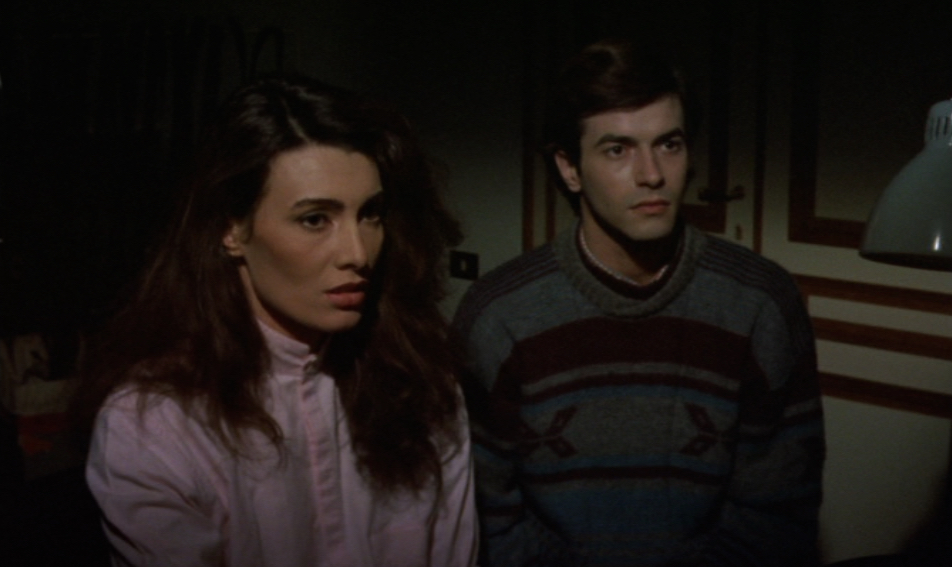
Later that day, Bruno makes a trip to see the director of the movie, Sandra (played by Anny Pappa) in the editing suite. Here, we find out that the opening scene with Bob and the ball in the basement is a scene from the film Bruno is scoring. Bruno is having reservations about working on the film as he hasn’t composed music for a horror film before. Sandra assures him that he is the right choice for the film and his inexperience in the genre is exactly why she wanted him to do it. Sandra explains she also chose the villa specifically as it is isolated and will probably scare Bruno. Slightly sadistic Sandra, but I guess people do suffer for art.
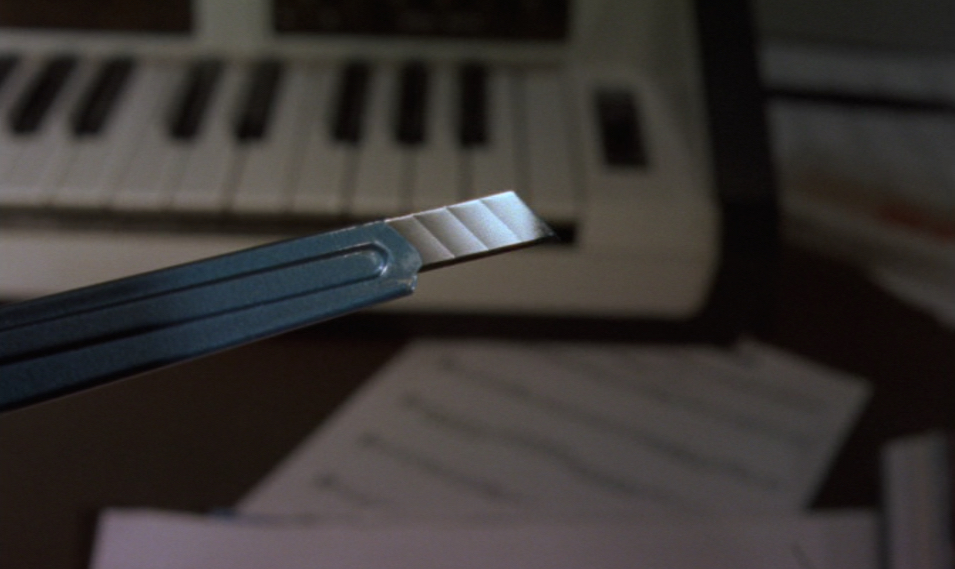
Back at the villa, we see someone is lurking about. We are unable to see who (because that would obviously make the rest of the film slightly tedious as we wait for characters to catch up with the audience) as we are seeing this from the mysterious figure’s point of view. They seem to be paying particular attention to Bruno’s audio equipment. While checking out the kit, they pick up a box cutter knife and cut through a photo of a naked woman from a magazine.
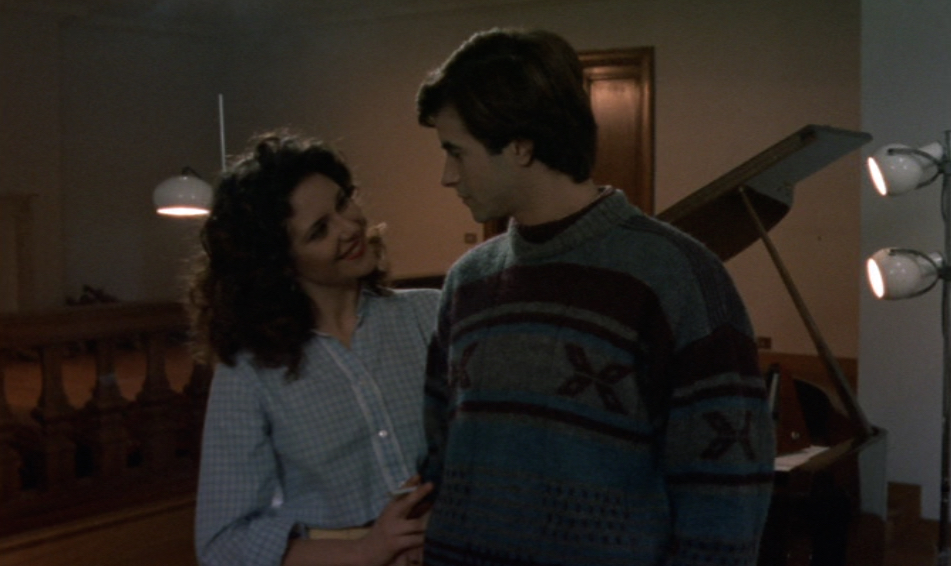
Bruno arrives back at the villa to find the patio doors slightly ajar. As he closes the doors we see he is being watched by the mysterious intruder from the garden. Bruno begins to play the piano but soon gets distracted by the cut up photo of the woman. This prompts him to have a quick look around the villa, when suddenly, a young woman bursts out of a cupboard. This is Katia (played by Valeria Cavalli) who lives over the road from the villa and she asks Bruno if he is a friend of someone called Linda. Katia seems very guarded as to why she was hiding in a cupboard and also seems to be on heat as she is constantly telling Bruno how cute he is and draping herself over him.
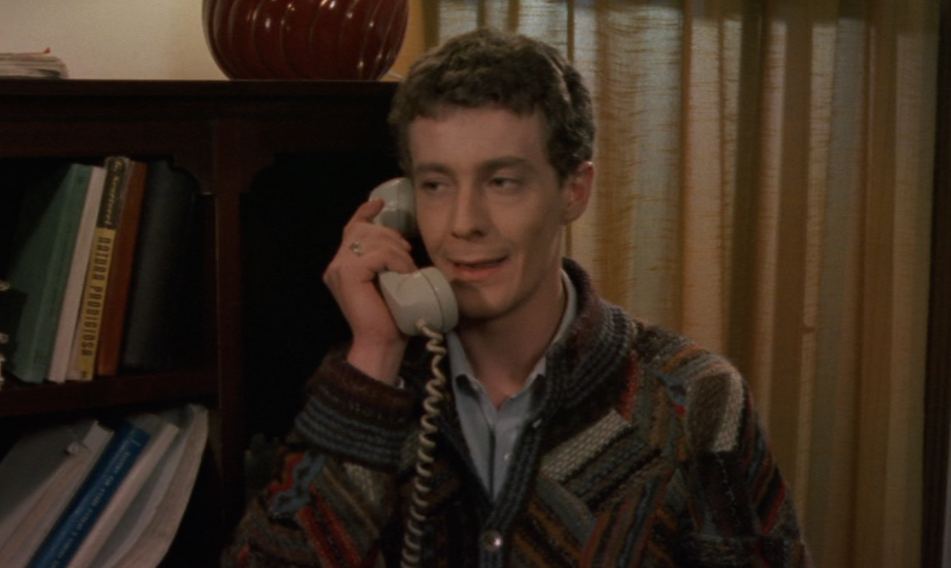
Before things start getting too sexy, the telephone rings. It’s Tony, calling to see if Bruno has been able to record him a tape yet – patience is a virtue Tony! Plus Bruno’s been pretty busy fighting off horny neighbours. Bruno informs Tony that not many of the lights are working in the villa, to which Tony replies that Linda preferred the dark, but Giovanni should be able to help fix them. All of a sudden, Katia is desperate for the toilet and interrupts Bruno’s phone call to ask where it is. Surely she would know, after all, she has managed to break in and hide in a cupboard. I suspect she has done that before too, so I’m fairly certain she would know the basic layout of the villa. After finishing the call, Bruno goes to find Katia but she isn’t in the toilet, so he looks in the next obvious place: the cupboard. She isn’t there either but he does find a rather childish diary belonging to Katia, where she has written about finding out Linda’s terrible secret.
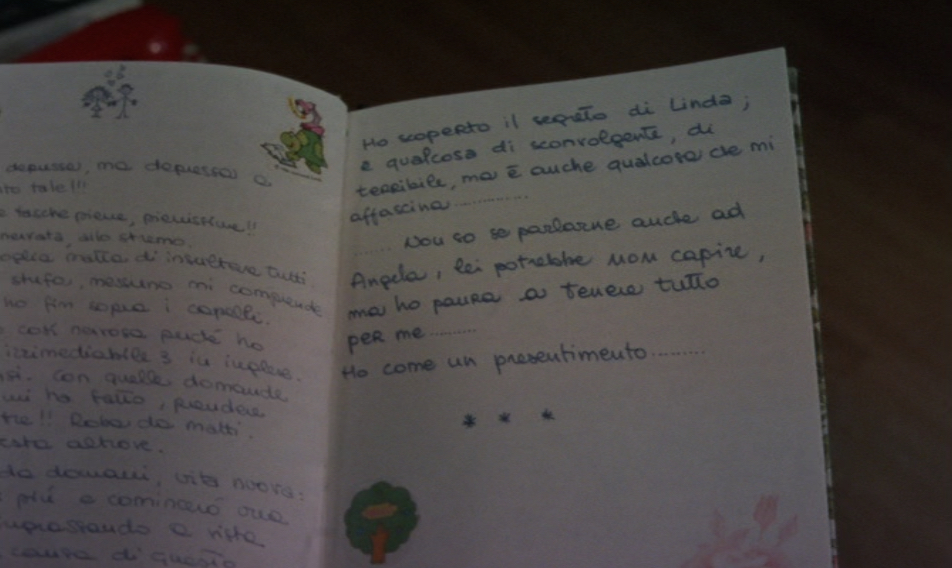
Not concerned by the disappearance of his guest or her creepy diary, Bruno goes about practicing some of the score he is writing for his friend’s horror film.
Meanwhile, we see that Katia has made her way outside, where she comes face to face with a knife wielding figure, and a chase ensues. Bruno’s music continues to play as we see Katia get sliced and diced. This highlights something which this film does very well, which is getting the diegetic music to act as non-diegetic, meaning that Bruno’s score which is being played “for real” in the film then also acts as the soundtrack to the film we are actually watching. Sadly this technique isn’t used throughout the film but it is very effective.
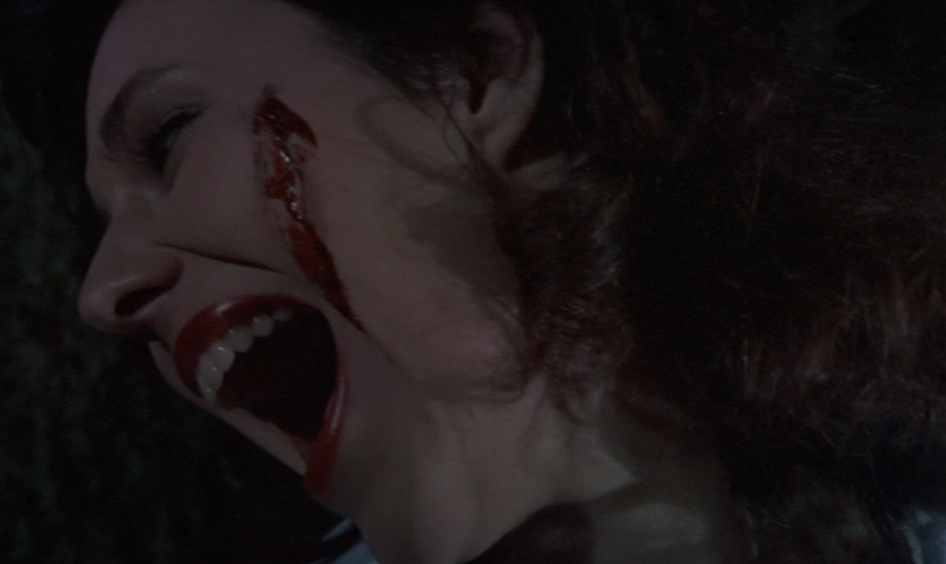
Katia’s dead body gets dragged off as Bruno listens back to the recording he has just made but he can hear some strange whispering faintly in the background of the recording. He manages to isolate the voice and it sounds like a woman talking about a secret that no one must find out about. Bruno goes outside for a cigarette and hears some rustling in the bushes, and as he approaches we see that Katia’s bloody body is right next to his feet (unbeknownst to Bruno) but before the killer is able to pick him off too, the telephone rings. There is a faint whisper on the phone before it goes quiet and, at that moment, Bruno notices blood on his trousers which had rubbed off the leaves of the bush moments before.
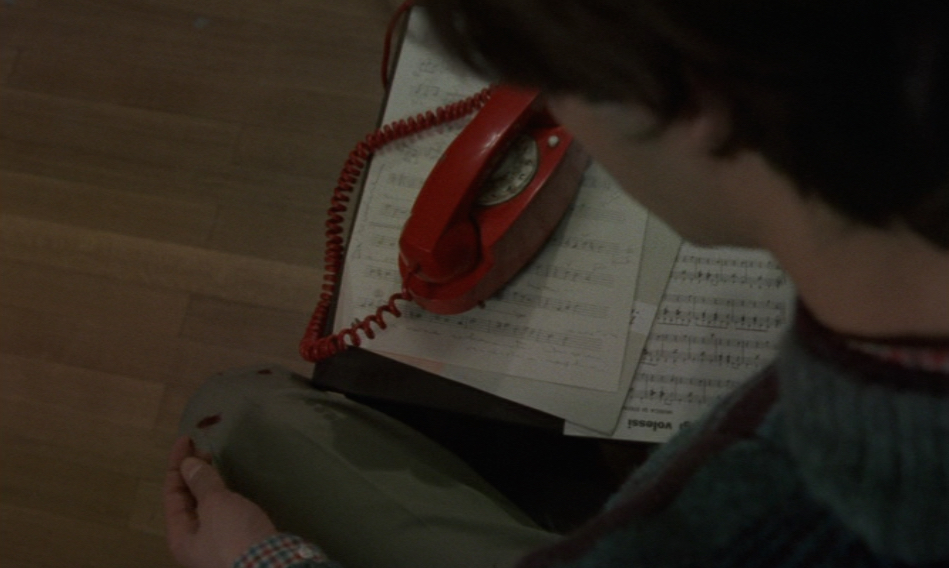
Bruno goes back outside with a torch to investigate and finds Giovanni’s out-house and next to it, a staircase with drops of blood on them. All of a sudden, he hears the recording of his music playing again, so he makes his way back to the main villa to see who is there. Predictably, by the time he arrives back, there is no one to be seen but his recording has been destroyed and the pages of Katia’s diary have been ripped out and put on the open fire (which I might add, always seems to be blazing away without any human intervention), much to his displeasure.
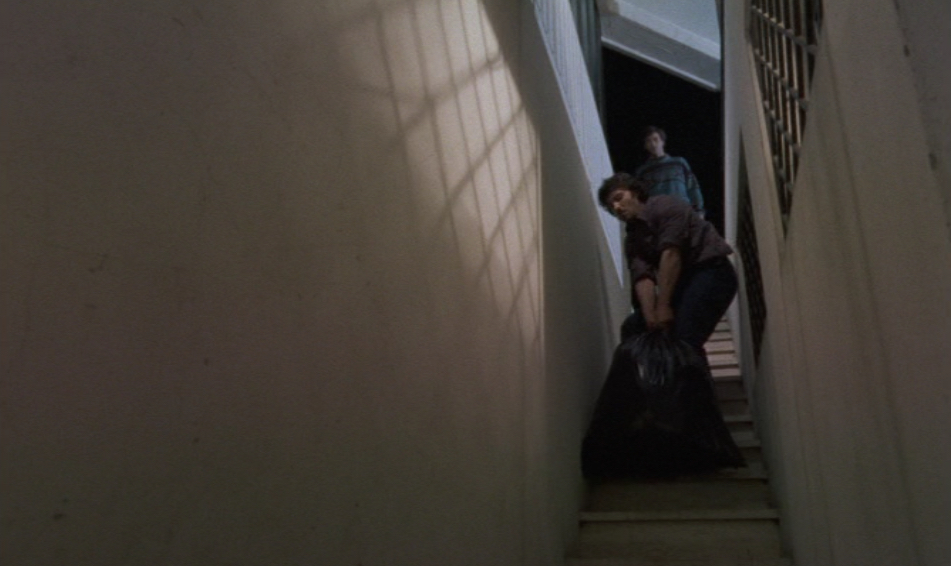
Bruno makes his way back over to Giovanni’s after seeing the lights go on, where he finds him dragging a heavy sack up the previously mentioned stairs which he claims is full of old newspapers and magazines. Bruno helps him with the bag and takes the opportunity to quiz Giovanni about Katia (whom he has never heard of) and Linda (whom he hardly knew).
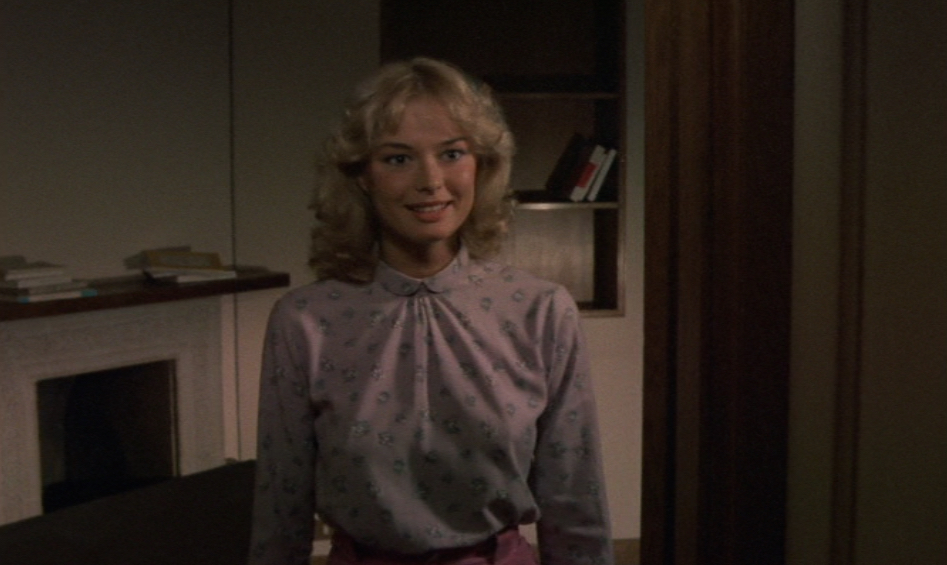
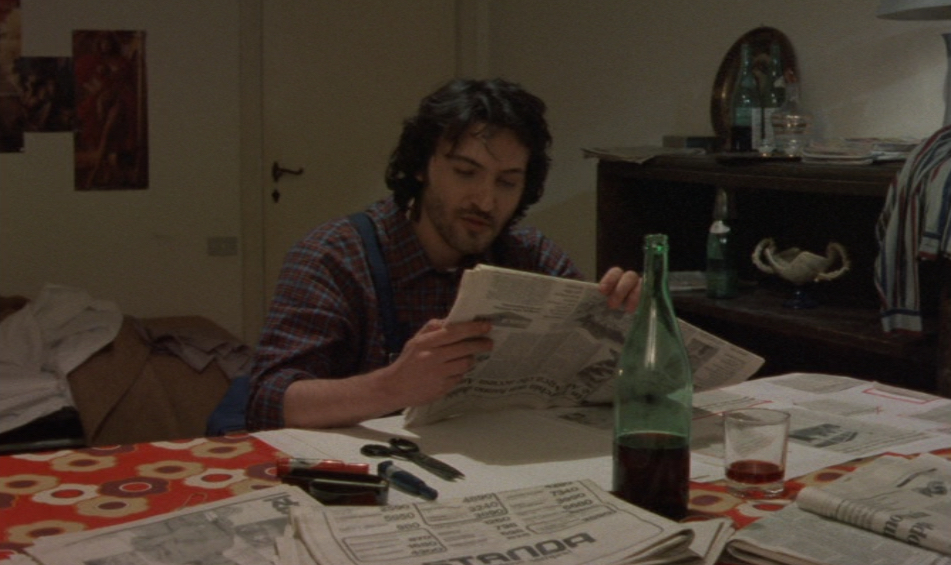
Bruno realises he’s not going to get much from Giovanni so returns to the villa to find his girlfriend, Julia (played by Lara Lamberti), has arrived and let herself in. Julia tells Bruno that she can’t stay long as she is performing at a theatre in Naples and she did try to call him to say she was on her way but the line wasn’t very good. Bruno seems relieved that at the very least there is an explanation for the silent phone call he received, although there are obviously still lots of strange things that have happened which he cannot explain. We cut to Giovanni who appears to be making a scrapbook of newspaper articles about murders. Well, everyone has to have a hobby I guess. At least it explains the sack of old newspapers.
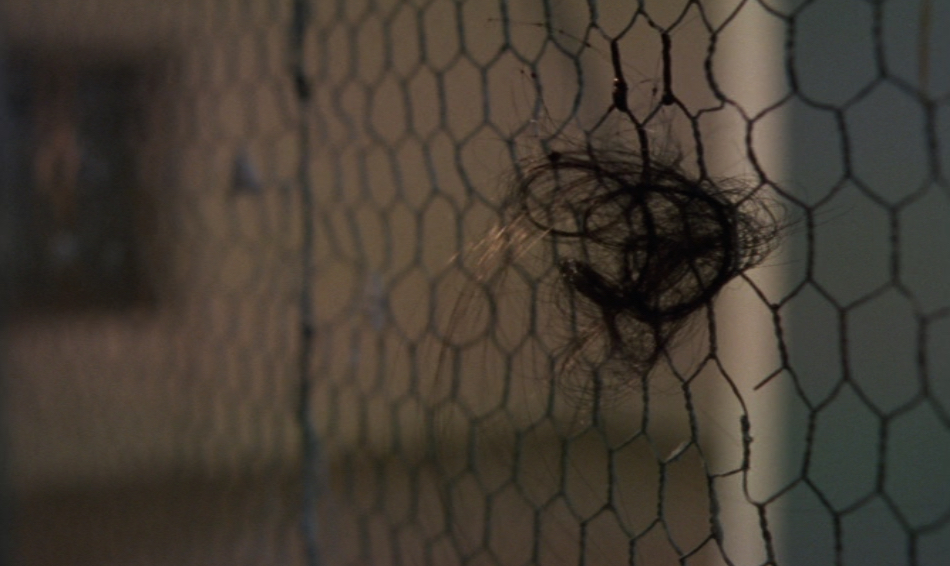
The next morning, Bruno is trying to piece together what has happened but Julia is less than supportive after hearing her boyfriend repeatedly talk about another young attractive woman who just appeared in the villa. Although, Bruno didn’t need to tell Julia that he found Katia attractive. Julia mocks Bruno’s Sherlock Holmes’ type rationale for the previous evenings events, saying “and the killer naturally is the caretaker”. Julia leaves to travel back to Naples, leaving Bruno to explore the villa for clues. Here, we get quite a nice little scene where Bruno fails to notice a lock of Katia’s hair, left over from last night’s carnage. The music here is brilliant (now non-diegetic) and very hostile with some high-pitched sounds reminiscent of Tobe Hooper’s classic, “The Texas Chainsaw Massacre”.
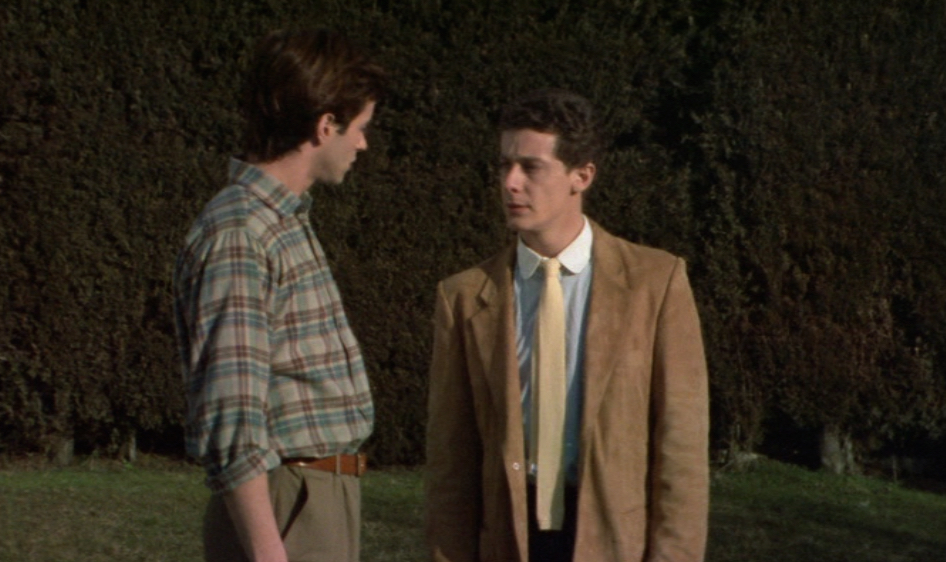
Bruno manages to find a locked room, and as he tries to force it open, a voice startles him. It’s Tony again, who tells Bruno that the room is “locked tight” and contains objects belonging to the last tenant (Linda). Tony explains he is here to check out the swimming pool as it has been kicking out a bit of a stench but Bruno is more interested in quizzing Tony about Linda and Katia. Just like the other characters so far, Tony is cagey about Linda. Bruno explains his theory that Katia came to the villa to meet Linda but queries whether she would still have a key. To be fair Bruno, key or no key, people just appear in the villa anyway so I don’t think locks are really the issue here. Before Bruno can question Tony any further, the telephone rings and Tony leaves, without even looking at the swimming pool. What a worthwhile trip that was.
Bruno answers the phone to hear a creepy voice telling him that they will kill him. Don’t worry though, it’s only he’s ‘friend’ Sandra playing a prank! You dirty trickster Sandra! After scaring the shit out of Bruno, Sandra asks if they could meet later to discuss some ideas for the film, to which Bruno agrees. Back out in the garden, we see Angela, a friend of Katia’s, arrive to use the swimming pool (although I suspect it’s too cold for that really judging by the fact that you can see peoples breath).
Considering Bruno is staying at the villa so he is secluded and can focus on his music, this place seems to have more passing traffic than your average train station… at rush hour.
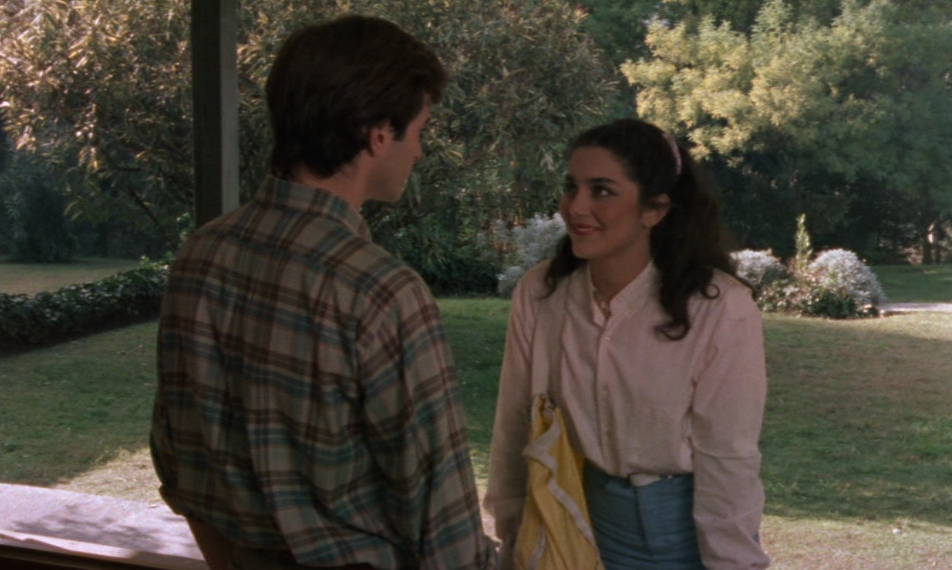
Bruno manages to speak to Angela before she takes a dip and finds out that Katia was at the villa the previous night to get her diary back. Whilst this piece of information makes sense, it does nothing to explain the strange events which have been occurring. Angela makes her way to the changing room and begins to undress. Little does she know she is being watched – don’t be concerned though, it’s only Giovanni having a little perv.
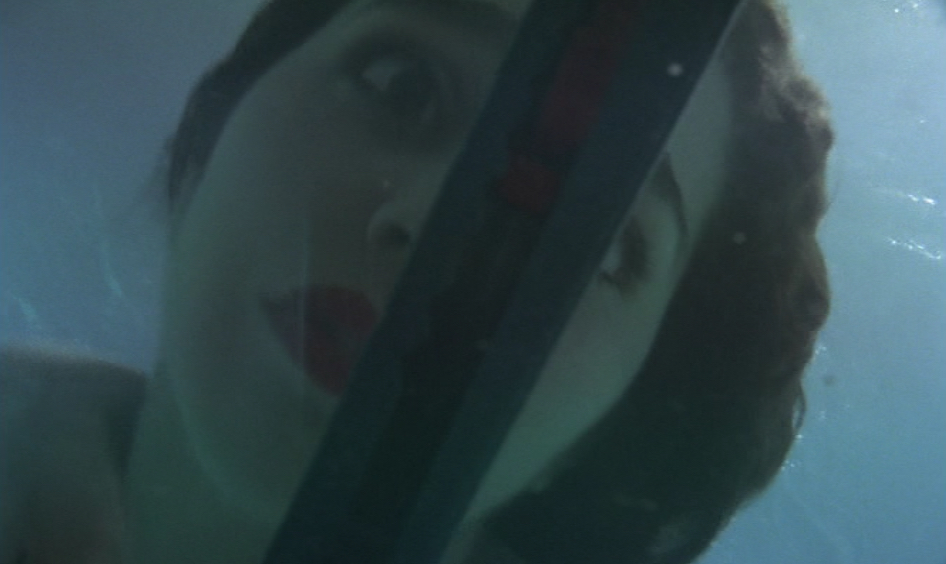
Angela takes the plunge into the pool and we see there is a blade at the bottom of the deep end. Here we get some nice shots of Angela swimming with a vantage point from the bottom of the pool. Angela eventually spots the knife and dives down to get it and bring it up to the surface. With Bruno out of the villa, Angela takes the opportunity to use the bathroom inside, where we also see a mysterious figure selecting a knife from the kitchen and making their way up the stairs.
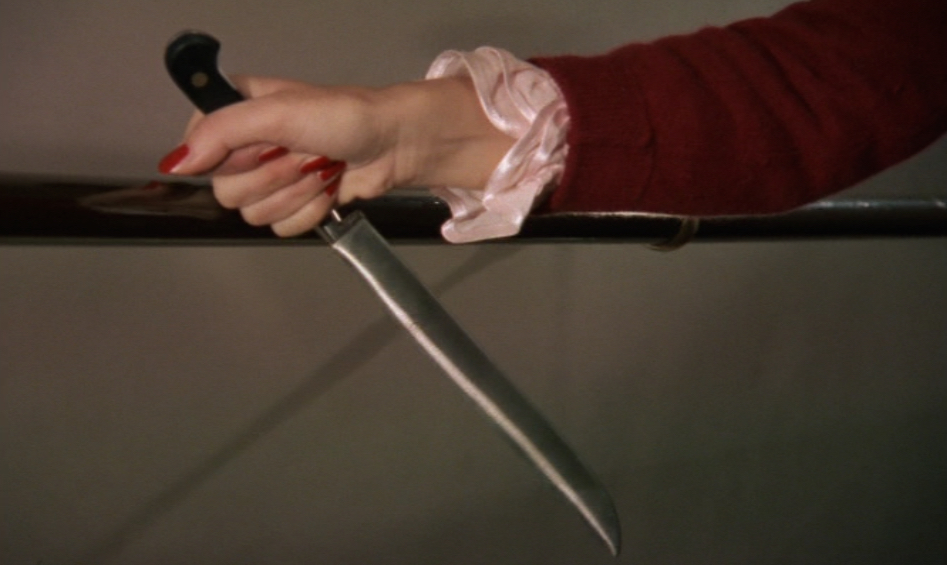
It’s at this point we see more of the killer whom appears to be female. This is based on the fact they are wearing nail polish, a skirt, and feminine shoes. These days you probably aren’t allowed to make such assumptions that someone wearing such items would be female but seeing as the film was made in 1983, I think it’s safe to say they are implying the killer is female.
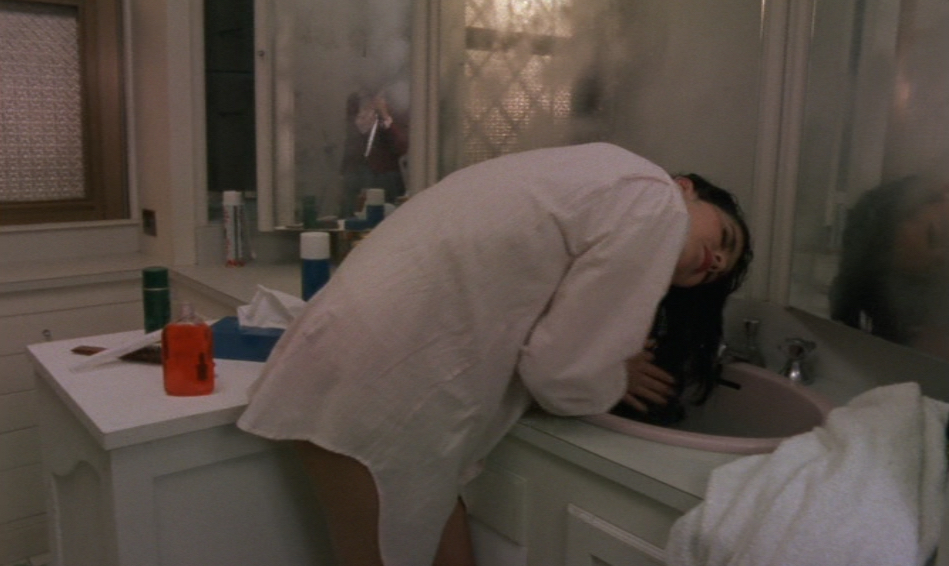
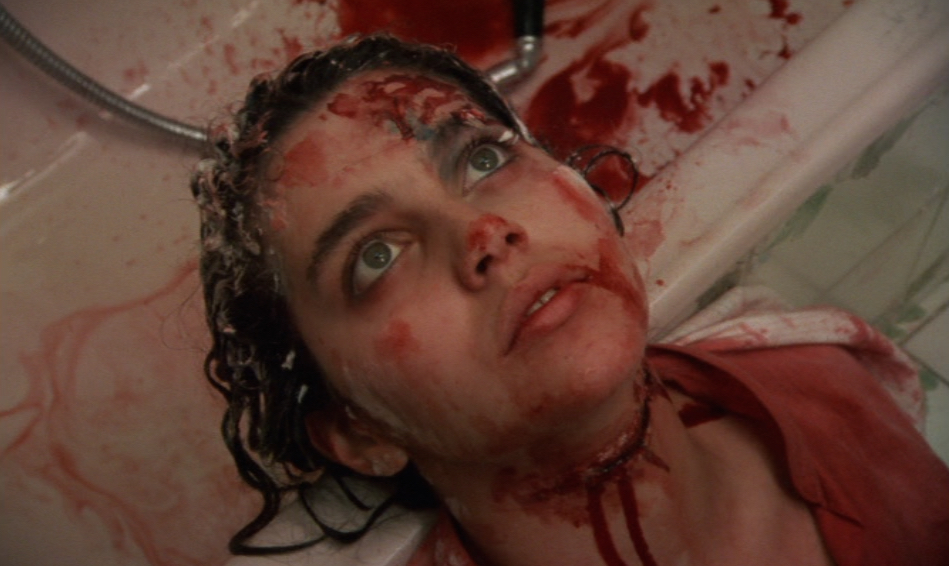
Now we get a scene, which, for me, is possibly the highlight of the film. We see the killer enter the bathroom, her face covered by the steam on the mirror, as Angela washes her hair in the sink. The soundtrack fades away as the killer moves closer. We now see that the killer is dressed in very conservative clothes, that of an older woman, a la Norma Bates. As Angela reaches onto the side for a bottle of shampoo, the killer slams the knife through her hand and into the wooden top. The killer then places a plastic bag over Angela’s head and repeatedly bashes her head against the side while laughing manically. Realising her only escape route, Angela begins to pull her hand, forcing the blade to cut through more of her flesh, in an attempt to set herself free. Alas, it is too little too late, as Angela succumbs to suffocation and collapses against the bath, leaving the killer to cut her throat open just to make sure.
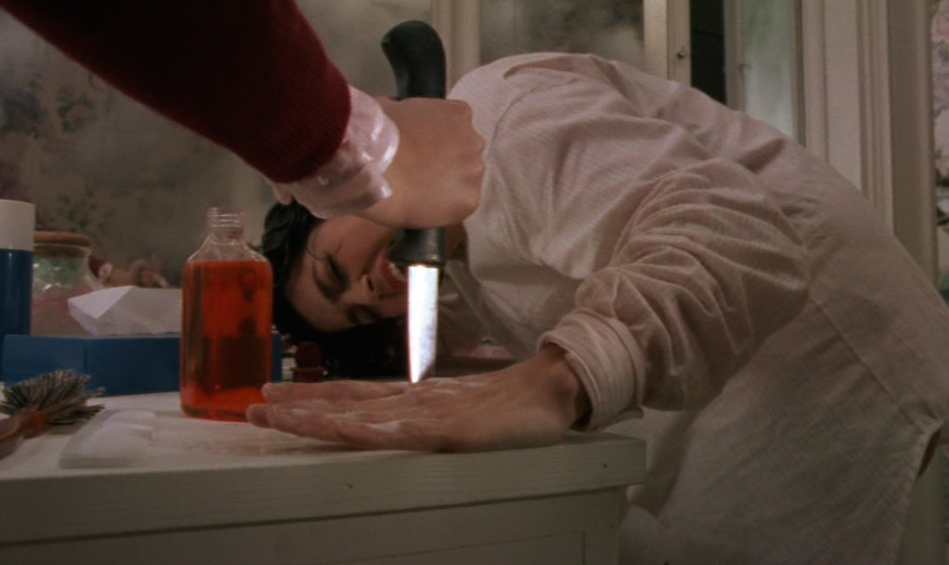
This scene is masterfully done. The lack of music only heightens the visceral imagery of a woman forcing herself to go against natural human instinct; to hurt herself more to try and survive. The killer then begins cleaning up the bloody mess using tissue paper (good luck with that), whilst shrieking, again reminiscent of “The Texas Chainsaw Massacre” and Leatherface’s whimpers.
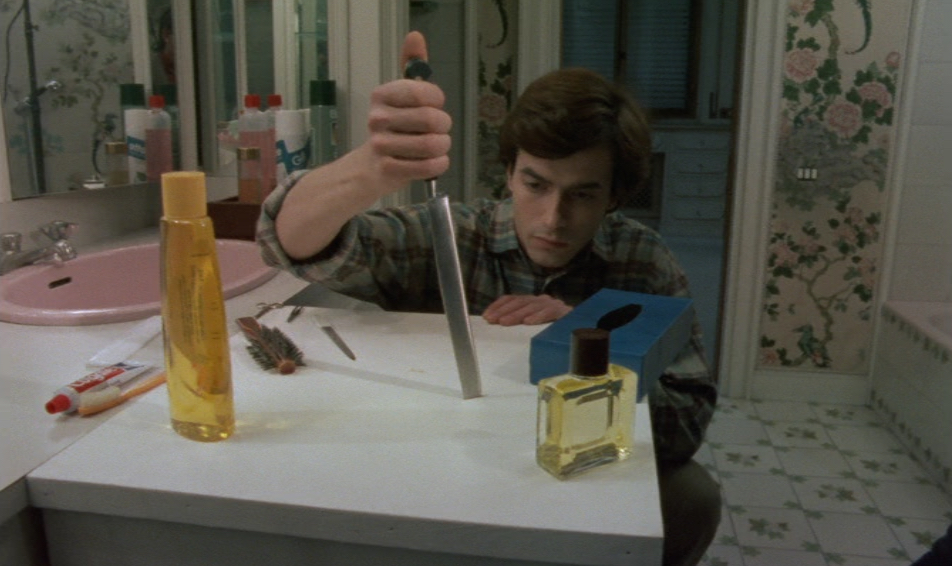
Bruno decides to head back to the villa after waiting for Sandra, who hasn’t shown up. Once back, he pours a glass of water in the kitchen, and notices that one of the knives has been taken down from the knife rack and has been left on the draining board. Bruno makes his way up to the bathroom where he finds the slit in the wood where the killer plunged the knife through Angela’s hand. It would seem that there are some things that the killer isn’t able to cover up, although putting a box of tissues over it was a slightly lacklustre attempt. Bruno pokes at the slit to find there is still blood sat in its shallow well. Despite this scene showing Bruno gathering information about events we have already seen, it is still very suspenseful and has a Hitchcockian style to it. Bruno then tries putting the knife into the slit, a perfect fit it would seem, and this prompts Bruno to search the villa, blade firmly in hand, to see if he can find an intruder.
The search is futile, so instead Bruno begins to record a message onto tape, stating he is in grave danger and that should something happen to him then the recording will be evidence that two murders happened at the villa. You could just leave the villa Bruno. Halfway through the recording he is disturbed by a knock at the door. It’s Sandra, and she is very interested in the chain of events that Bruno explains to her. Quite rightly, she asks why Bruno hasn’t called the police yet, but he says that without the bodies there is no proof. You could ask Giovanni if he saw anything – he does live in the same grounds. Bruno explains to Sandra that the only room he hasn’t been able to search is a locked room containing belongings to the mysterious Linda. Sandra seems troubled and wonders if it could be the same Linda she used to know. Maybe Linda isn’t a common name in Italy, I dunno.
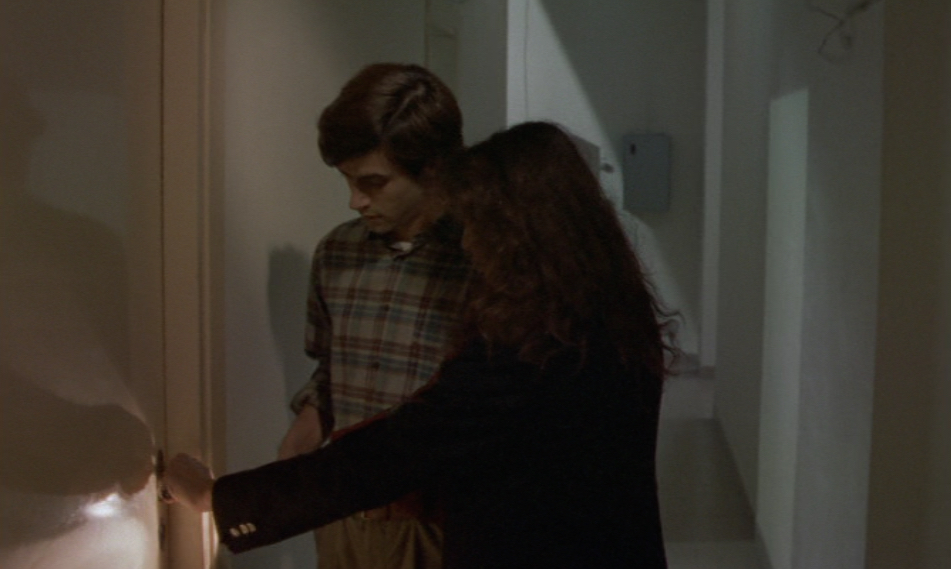
The pair decide to see if they can break into the locked room but, to their surprise, they find it now open. Bruno and Sandra cautiously open the cardboard boxes in the room, expecting to find the dead bodies of Katia and Angela, chopped into little pieces but instead they find, magazines and shock horror, a suitcase full of tennis balls! Wait… What?! Why is this scary? Turns out it is the same Linda that Sandra once knew and she was obsessed with tennis, and that Sandra’s new film is partly based on Linda. I guess the fact someone owns a few tennis balls allows filmmakers to say their film is “based on a true story”.

Before we find out anymore about Linda, the pair hear movement elsewhere in the villa – the sound of a woman’s shoes on the floor. Now believing Linda to be the killer, Bruno and Sandra creep around the house (unarmed) to find her and they eventually see a shadow, clearly holding the large kitchen knife from earlier.
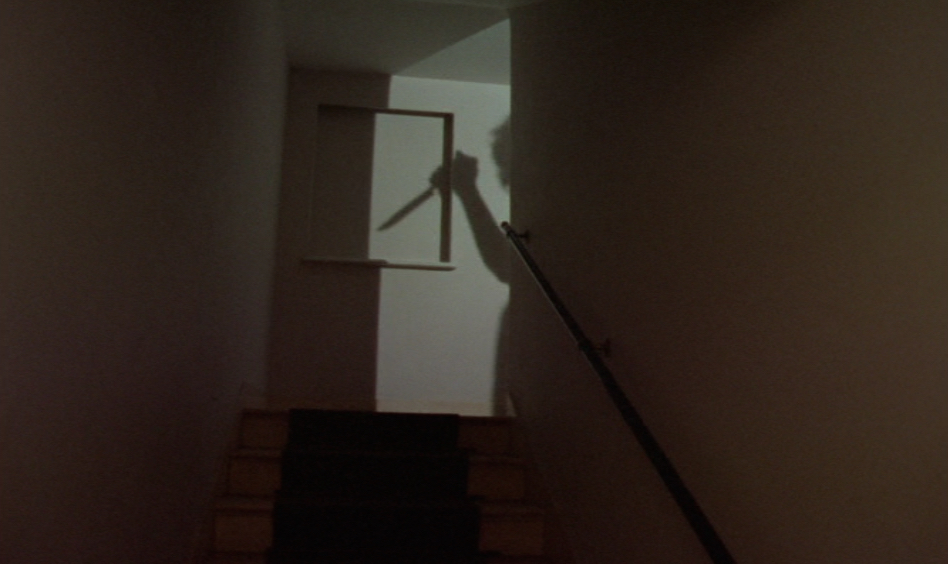
Bruno decides that Sandra’s scarf is a suitable weapon for this situation and he moves forward to try and catch her, however the mysterious guest is hiding behind a curtain. The scene is pretty tense as Bruno walks up and down the corridor past the curtain, before pulling it back to reveal… oh, it’s Julia, who has let herself into the villa again (as apparently her show in Naples has been cancelled), and picked up the knife in self-defence in case the actual killer was about.
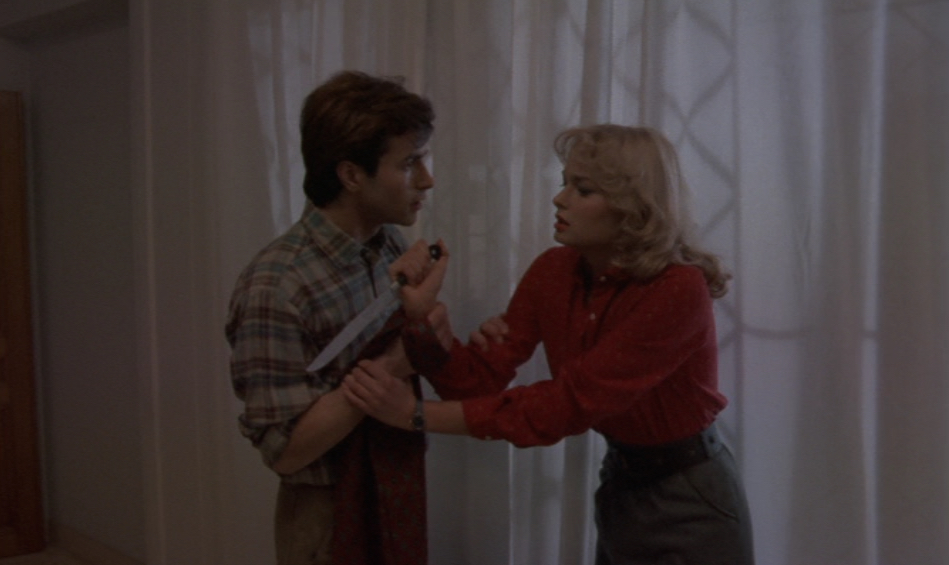
I know this is just a fake out scare but come on, surely Julia would have been calling out Bruno’s name rather than stalking the corridors brandishing a kitchen knife before hiding? That’s not normal behaviour. The trio laugh off the fact that one of them could have been accidentally stabbed or strangled and Sandra leaves the lovebirds for the evening. Julia shows her jealous streak again as she questions Bruno about what he and Sandra were doing in the villa, which he shrugs off. You could always just tell her the truth Bruno. Julia then says she has a surprise for Bruno, so she runs off and hides in the cupboard just as Katia had, which seems a bit strange. “I thought you liked girls in cupboards” Julia retorts. Killer or not, she’s fucking weird. Clearly this is enough to get Bruno’s juices flowing though as they make their way onto the bed where Bruno finds a tennis ball. “Is this yours?” he asks, to which Julia reminds him they met playing tennis. That still doesn’t explain what it’s doing on the bed! If I met my wife at a funeral, it doesn’t mean I would expect her to carry a headstone around with her all the time! After some awkward flirting the couple get down to kissing but Julia does not appear into it.
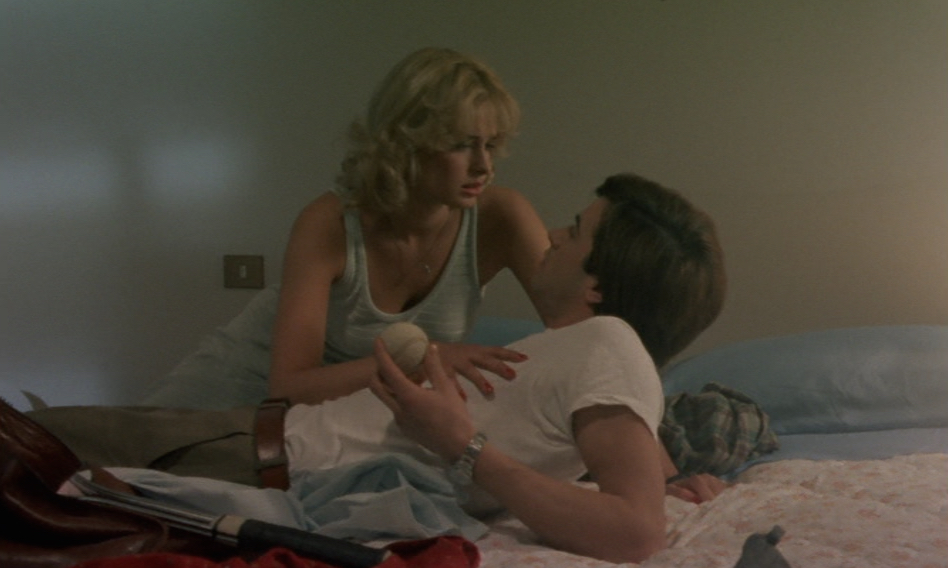
It’s worth pointing out here the huge discrepancy between the dubbing and the subtitles on the DVD. The subtitles show Bruno saying “ours really is a great love”, to which Julia replies, “it won’t last long but it will be unforgettable”. However, the dubbing has Bruno saying “are you giving me a feel?”, to which Julia says “and that ain’t all you are going to get tonight cockroach!”. Seems like the original Italian dialogue was a bit more classy.
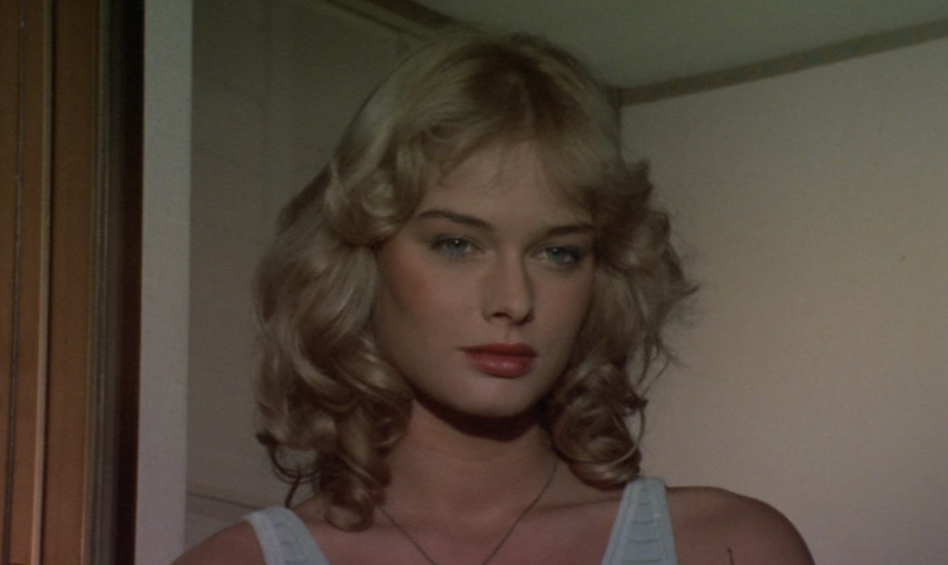
The next morning, Bruno awakes to find Julia has gone again (check the cupboard) so he searches the villa to try and find her, to no avail. Bruno goes outside and finds Giovanni who says he saw Julia by the outhouse at dawn and says he thinks she must have insomnia because he has seen her several times lurking in the early hours. All the while, we see Julia watching from a distance suspiciously.
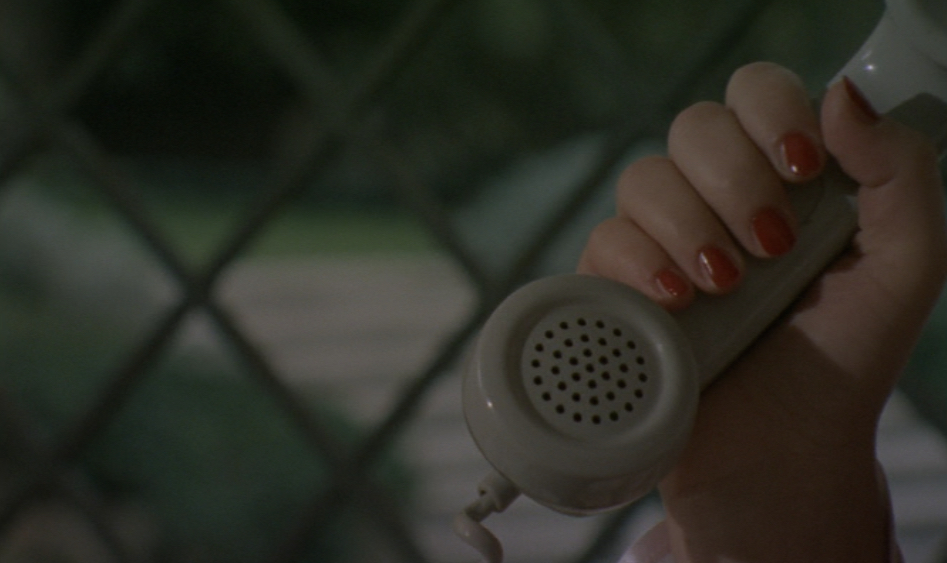
Meanwhile, Sandra is looking through an old phone book and finds Linda’s number which she calls. Linda picks up the phone (although we still don’t see her face but note the red nail varnish seen earlier) but does not respond to Sandra’s voice. Sandra tries to assure Linda that she hasn’t been betrayed, she is only using her story for her film, and she hasn’t told anyone her secret. It’s not clear what Sandra is referring to here but regardless, Linda has had enough and puts the phone down.
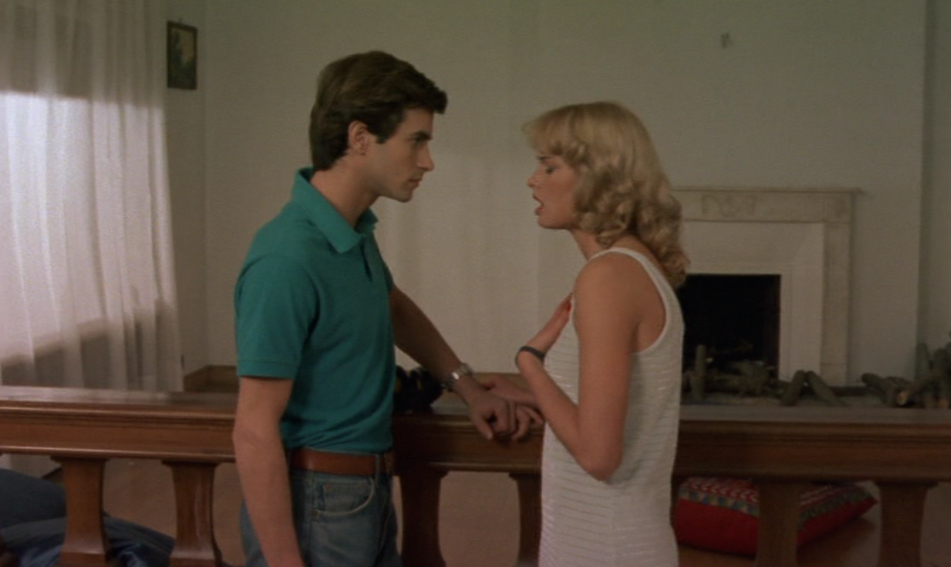
Bruno heads back inside the villa to find Julia now stretched out listening to Bruno’s music through some headphones. When asked what she is doing, Julia becomes very chippy and tells Bruno she needed to relax as she had a headache from hearing about all of his stories of girls going missing and a murderer at large. Blimey, this is a change from the last time we saw the two together the night before. Bruno, understandably, becomes defensive at this verbal attack but Julia continues to say that she thinks he has changed since working with Sandra but not to worry about her feelings; “just worry about your murders” she says aggressively.
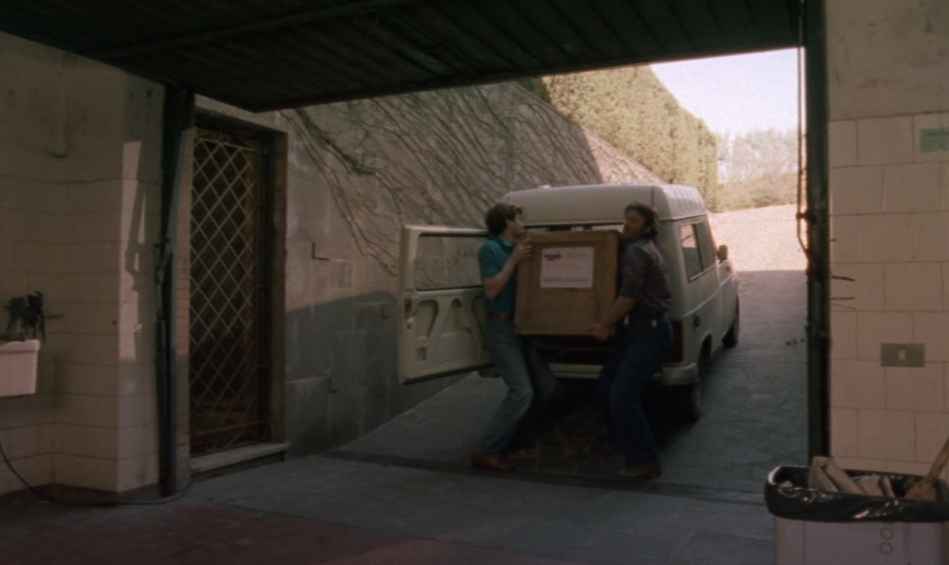
The film then jumps confusingly to Bruno helping Giovanni getting a new water filter for the swimming pool off the back of his van. From what I can see, “A Blade In The Dark” was originally going to be a television series before it was decided to cut it down to feature length, which might be why some of the editing seems a bit off here as there are potentially some scenes missing. I have to say though, this is the only time it feels that way so that is quite a feat.
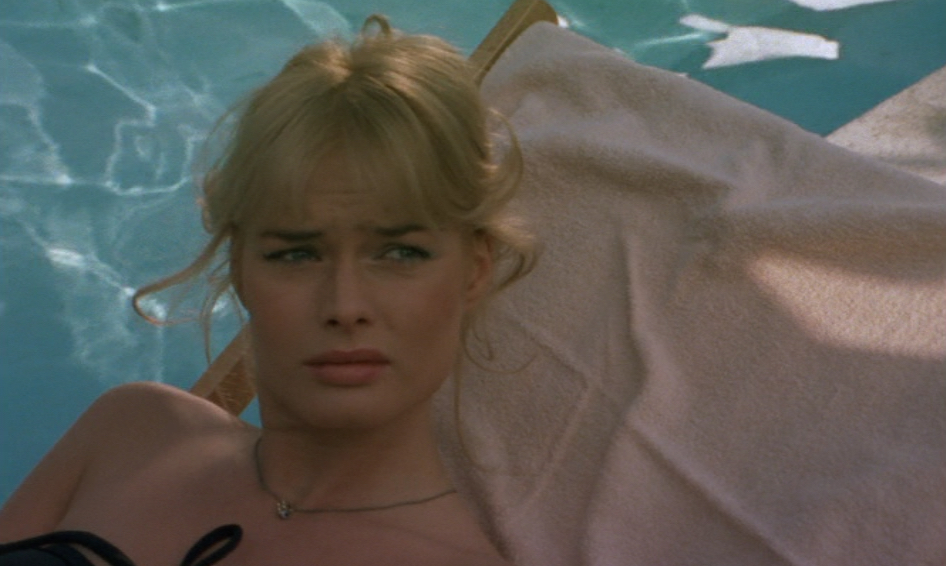
Bruno approaches Julia sun bathing by the swimming pool and tells her he needs to leave for a couple of hours and he would prefer it if she could come with him. Julia does not respond well to this and tells Bruno again that there is no killer and if there was then why hadn’t they been murdered already too. Fair point, but that’s not really how these movies work, and they would be a lot shorter if the killer just knocked off all of the characters in one go. Where’s the fun in that? The pair bicker some more before Bruno leaves to head into the nearby town. At this point, we see the villa is not that secluded, as Bruno appears to drive from the villa almost straight on to the main road. That explains how all these people end up there who let themselves in!
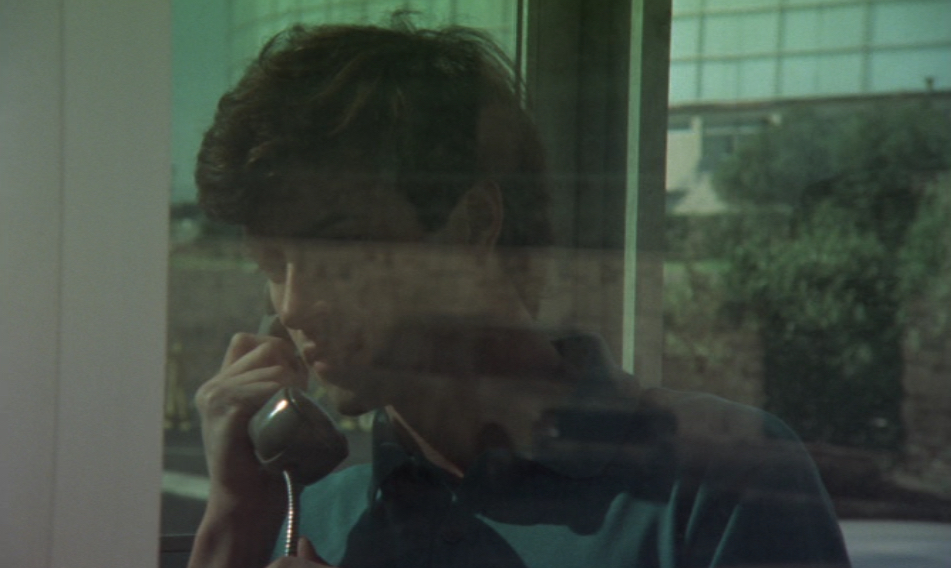
Bruno stops to use a pay phone where he calls the theatre in Naples where Julia was supposed to be performing, only to find that the show was not cancelled, and that Julia left after the opening night. Probably a good job she didn’t come with Bruno into town; that would have been a pretty awkward journey back to the villa.
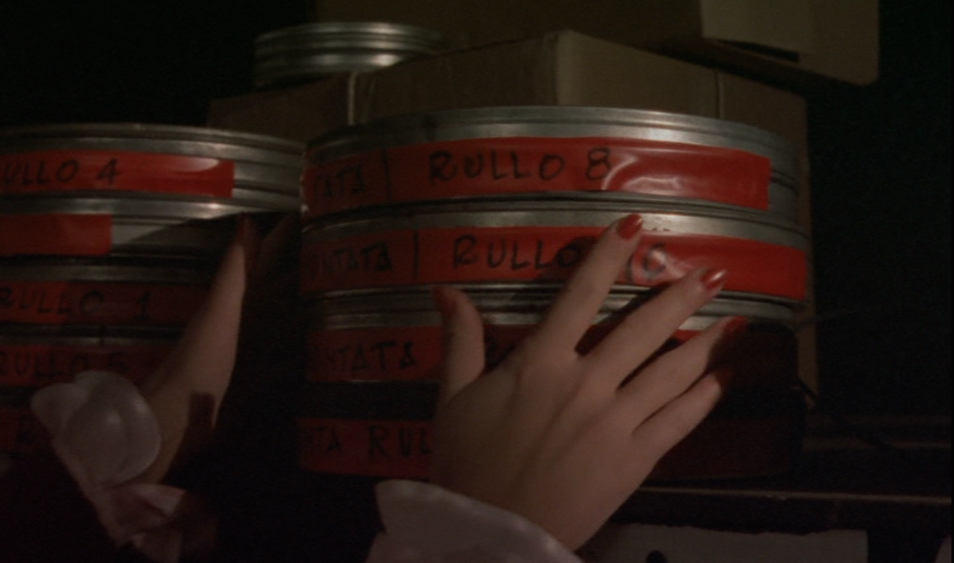
Meanwhile, in the editing room, we see a woman (presumably Linda) going in, finding the final reel of Sandra’s new movie and cutting the film into pieces. Next we see Bruno arriving at the editing room so he can see the final reel to help him compose the music for it, despite Sandra still wanting it to remain a secret, but, alas, it is too late, as Bruno finds it destroyed.
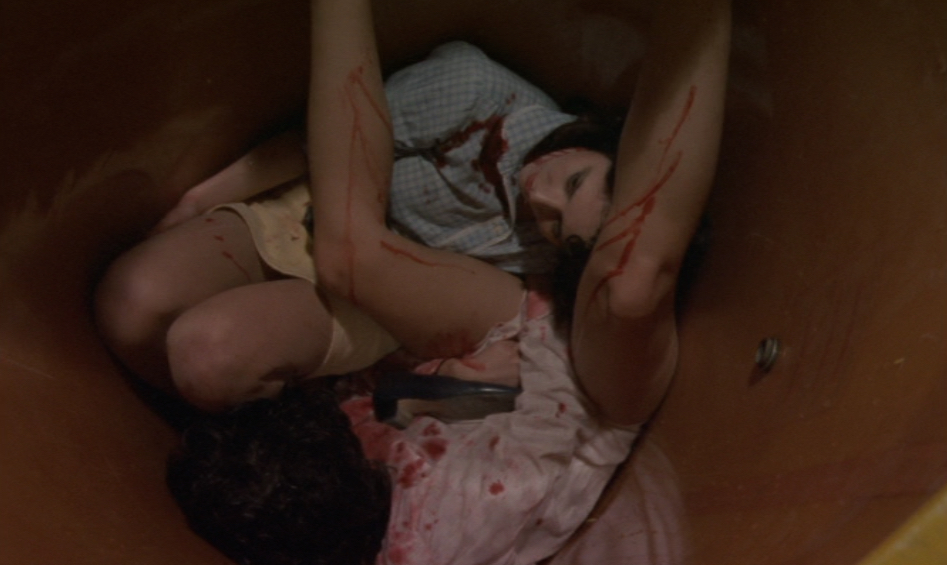
Back at the villa, Giovanni has set about fixing the filter for the swimming pool but opens the old filter to find it is blocked by something. He crawls under it to see if he can see what’s causing the blockage (and presumably the smell) when suddenly a bloody hand appears from inside. Giovanni opens the top of the filter instead to get a better look and finds the bodies of Katia and Angela, all twisted and tangled. As he recoils in horror he is repeatedly battered over the head with a wrench by the killer and dies.
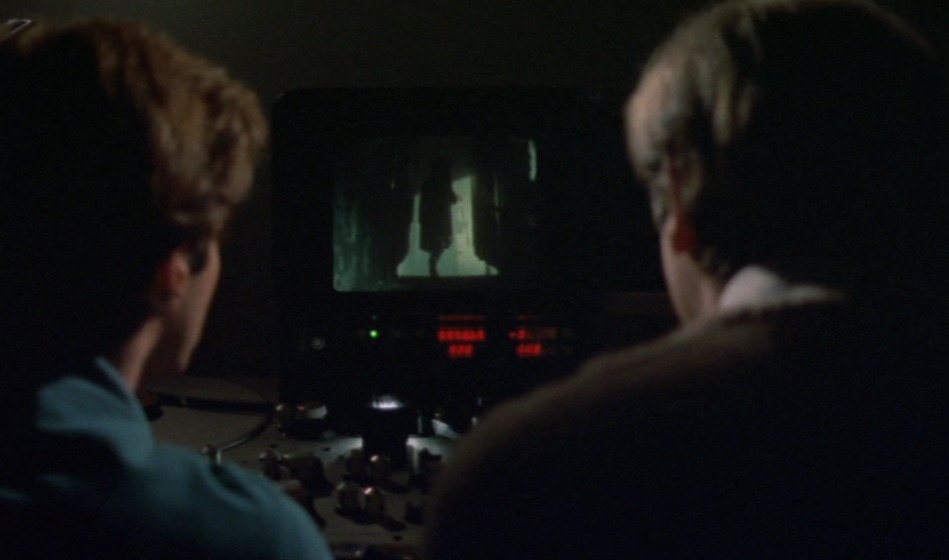
Returning to the editing room, Bruno and the editor, Carlo, have managed to cobble the final reel back together and sit down to watch it. “You’re a female, you’re a female”… not this scene again. Confused, Bruno questions Carlo whether this is the final reel of the film as he has already seen it. Carlo says it definitely is, and says “that boy, he is a good actor”. You got that right Carlo, all hail Bob! Suddenly Bruno notices a woman in the scene he had never noticed before. “I guess the killer of the film is this woman” says Carlo, “In the film?” replies Bruno, “I’m beginning to understand”. I’m glad you are Bruno because I’m not.
In the next scene, we find a scared looking Sandra, slowly walking toward the villa calling Linda’s name. She spots the bloody wrench and continues to go inside when suddenly Linda appears and strangles her with some of the final reel of Sandra’s movie. Once Sandra has let out her last breath, Linda continues to playfully drag Sandra’s body around the room whilst laughing hysterically. Very unsettling.
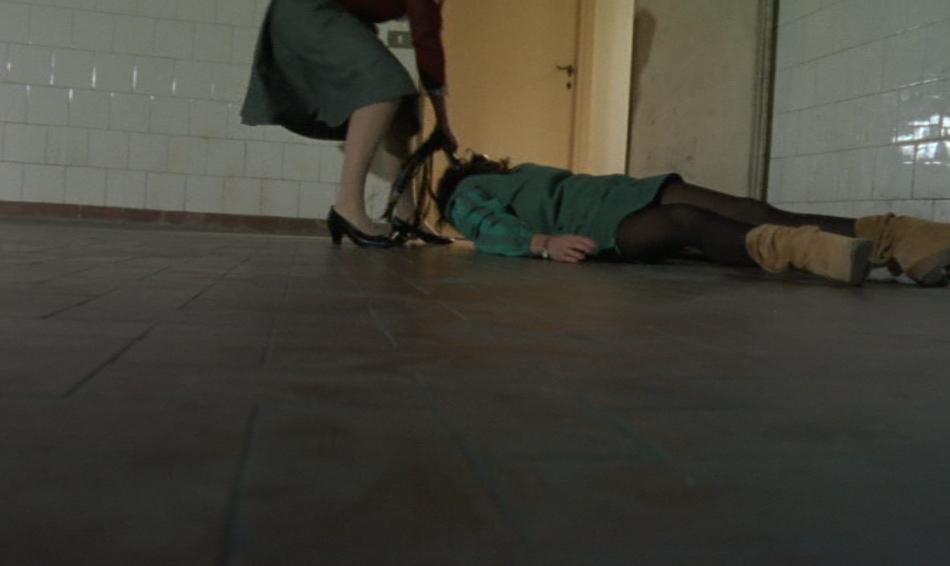
Shortly afterwards, Julia makes her way into the villa and finds Sandra’s body. Linda locks the doors, trapping Julia, and begins turning out the lights. As Julia creeps around the villa we can hear Linda’s faint laughs before an avalanche of tennis balls appear out of nowhere. Julia continues to make her way through the villa, walking past a frosted window where she sees Linda lurking. Like the image of Linda in the steamed up bathroom mirror earlier, this is very effective, and will certainly give you a chill.
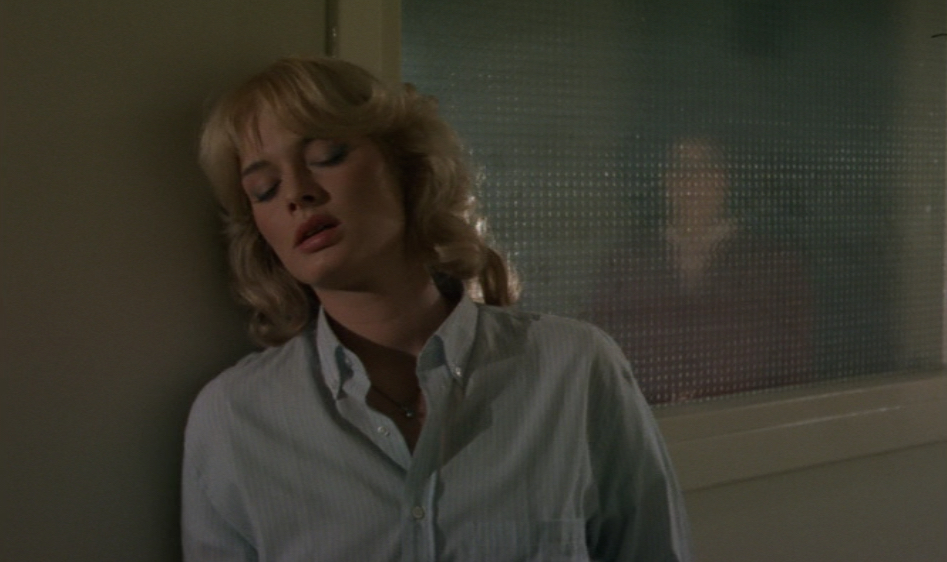
In a panic, Julia runs and hides in a cupboard – because when there is a killer on the loose it’s always best to put yourself in a confined space. As Linda giggles to herself, she begins opening up the cupboards one by one. “Don’t be afraid, I don’t want to hurt you, I just want your blood!” Linda whispers in her creepy childlike voice. Just as Linda pierces a knife through the crack in the cupboard, narrowly missing Julia’s face, we see Bruno arriving back at the villa. Bruno begins shouting Julia’s name, so she bursts out of the cupboard and runs towards Bruno with Linda close behind. Julia is not quick enough though and Linda manages to slam the knife through Julia’s chest.
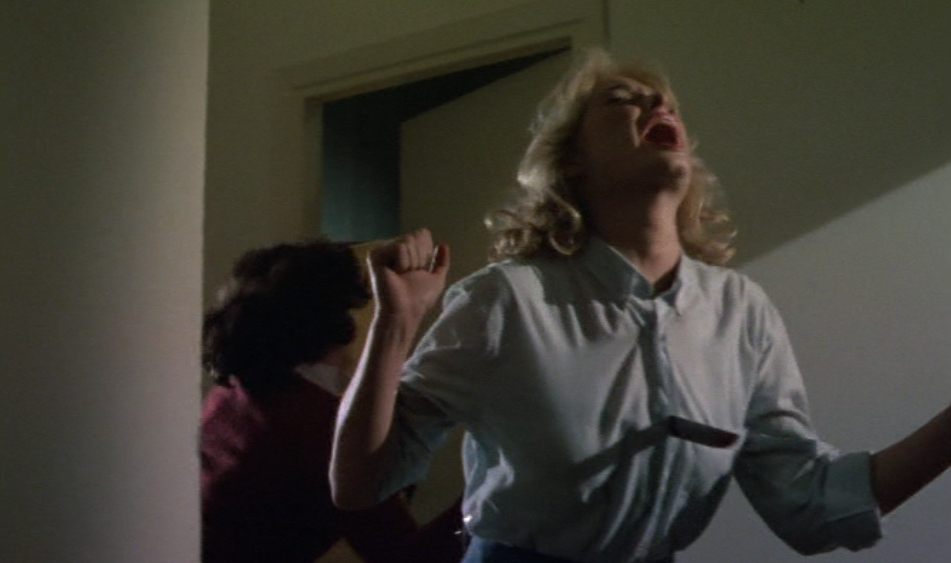
Bruno finds Julia’s body with Linda leering over it. Bruno picks up a brick from a nearby pile and manages to incapacitate Linda by hitting her over the head. It’s all too late, though, as the knife wound has killed Julia, leaving Bruno to approach Linda’s body to finally see what she looks like. At this point we can only see Linda’s hair poking out from behind the corner, and as Bruno makes his way closer, we see it is only a wig, and suddenly Linda appears brandishing the knife. And Linda looks like Michele Soavi! Hang on, that IS Michele Soavi!
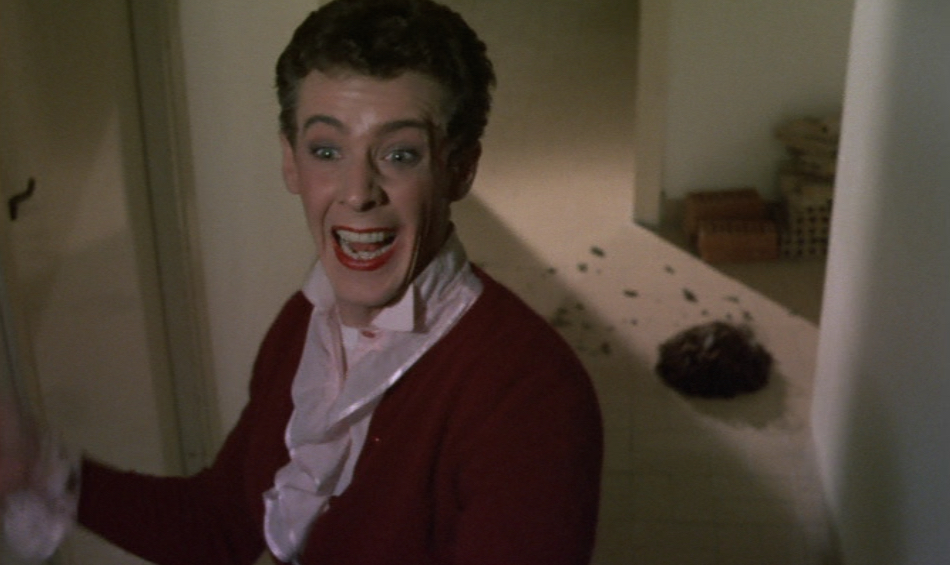
Turns out Linda has been Tony all along (or Tony has been Linda, depending on your point of view). Bruno manages to turn the knife back onto Linda/Tony, stabbing her/him, and as she/he drops to the ground dying, we hear Linda/Tony say “I am not a female child, I am not a female child”.
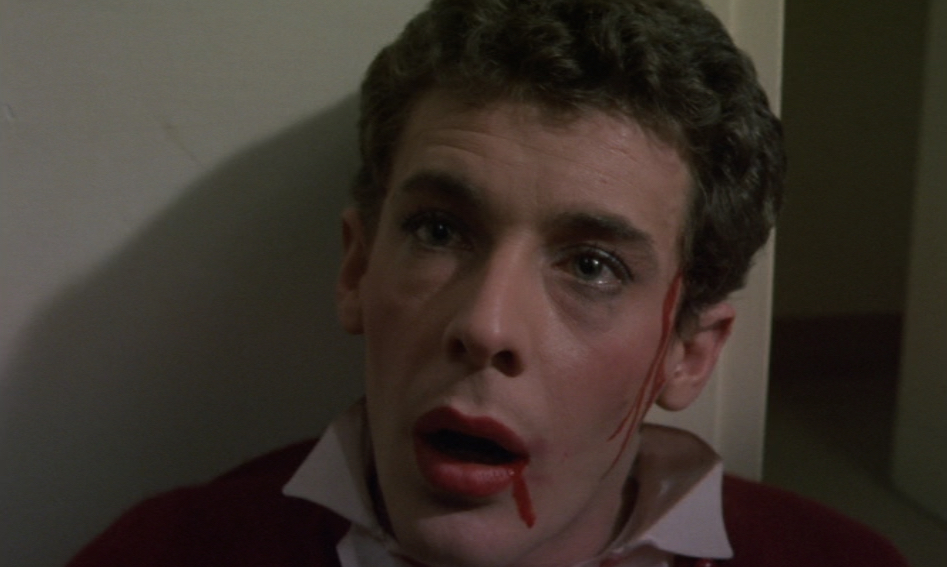
The film ends with Bruno and Carlo back in the editing room, watching the final reel of Sandra’s film and finding out that the mysterious female figure they had seen earlier was actually Bob dressed as a female, just like how Tony had ended up as Linda. Bruno tries to rationalise Tony’s actions by saying the bullying he suffered as a child had caused his masculinity to regress and created the Linda alter-ego but because Tony wasn’t able to kill his alter-ego, he took his anger out on other women.
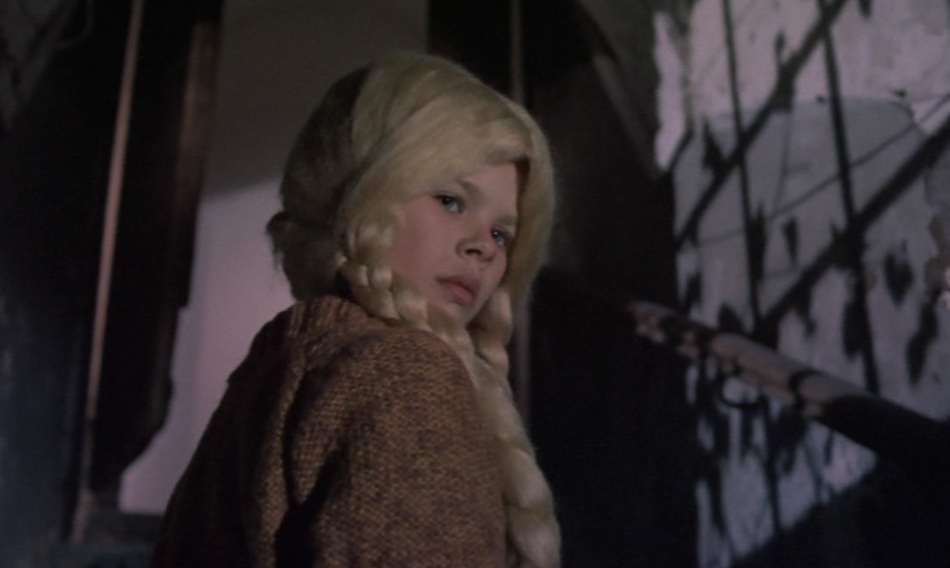
Without knowing it, Sandra had made a film based on someone she once knew, and by doing so, had made her giallo film a reality, with her as one of the victims and her musician friend creating the soundtrack. I’m not going to even try and delve into the psychology of Tony/Linda, that’s not the point of the film, the point is we have a nice little twist ending which makes sense within the realms of the film and I certainly didn’t ever suspect that Tony would end up as the killer. What a fool I was!
I do question why Sandra allocated this villa to Bruno, knowing it was owned by Tony/Linda. Saying, when finding the tennis balls, that it is the Linda she knew… Well, quite simply, she would have known that already. Tony is alive, and Linda is the same person as Tony. Sandra did know Tony/Linda’s secret. Unless, the secret which Sandra knew is that Linda is a murderer of women. In which case, why is she hanging around the villa herself and letting someone stay there with their girlfriend?
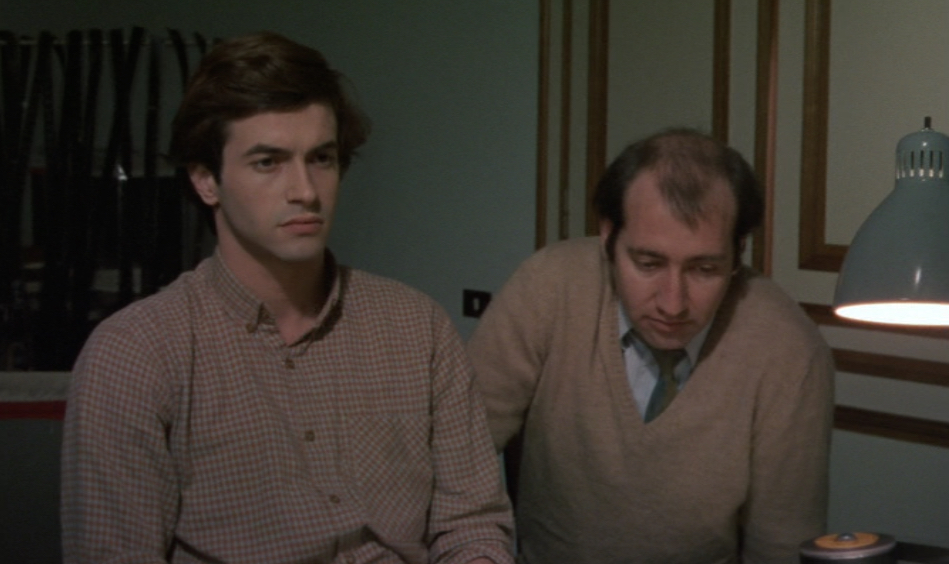
“A Blade In The Dark” is a well made, scary and in places, nasty horror film. Andrea Occhipinti is a likeable lead, Michele Soavi looks surprisingly good in make up, and the gore effects are well done and the deaths look convincingly painful. The film also has some very creepy imagery which did give me a chill. The soundtrack is simple but effective and the villa setting works well. As I mentioned earlier, the dubbing seems a bit off with Bruno especially sounding a bit Tommy Wiseau at times but it didn’t stop my enjoyment of the film. The lighting also feels a little flat and doesn’t have the bold colours that many other films of this style and period have, which is a shame, but that might have something to do with the films television origins. Bava would show his flair for bold colours two years later when making “Demons” with Dario Argento, but then again, that might be more Argento’s influence than Bava’s. There are the usual red herrings which I totally fell for the first time I watched it and despite now knowing that Tony/Linda was the killer, I still think there was something up with Julia, other than being extremely high maintenance!
There is an obvious Hitchcock influence in the film, specifically “Psycho” but that’s no bad thing. In fact many of Alfred Hitchcock films could probably be described as having many tropes that would become associated with giallo. Whilst “A Blade In The Dark” may not satisfy purists of the giallo subgenre, it is a nice introduction to it as it blends slasher elements and the murder mystery aspect plays out nicely with plenty of stabbings to enjoy along the way. If you are a fan of the genre and haven’t seen it before then I would strongly recommend giving it a look and if you are simply a fan of well made horror films, then you will also enjoy it and may spur you on to watch more giallo movies, which to my mind, is only a good thing.
 Si's Homepage Of Horror