AKA L’uccello Dalle Piume Di Cristallo / The Gallery Murders
Director: Dario Argento
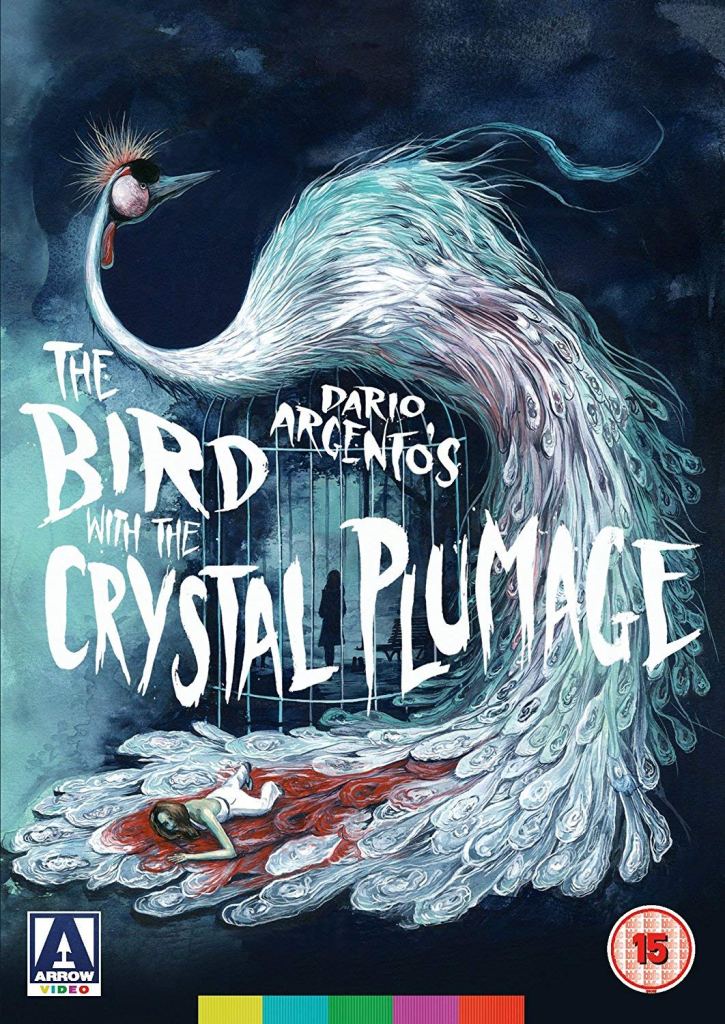
What is there to say about Dario Argento that hasn’t been said already… well nothing really so I’ll keep this intro short and sweet.
Dario Argento’s influence over Italian horror is undeniable. Not only did he master the art of the giallo film, taking what the likes of Mario Bava had started and then running with it through the 70s and 80s, he also helped nurture talent, such as Lamberto Bava and Michele Soavi. Without Argento, it is unlikely George A Romero’s zombie classic “Dawn Of The Dead” would have been made and despite his latter day filmography being patchy at best, he is still considered as one of the great horror movie directors.
Brad Jones (in his “Cinema Snob” alter ego) once described Dario Argento as “film school Fulci” and although said as a joke, there is an element of truth to that statement. I admit that Argento is possibly the better film maker and has more high points in his career, but both Dario Argento and Lucio Fulci often directed films of a similar ilk, though yet it seems Argento’s work has garnered a lot more critical appraisal and analysis. With that in mind, I’m going to review his films in the way I have a Fulci film, or any other directors film – not as a critic or a scholar, but as a fan, and without getting too analytical, mainly because I’m not qualified to do so, and also I can’t be arsed.
My personal feelings on Dario Argento is that I know I am going to be in safe hands if I see his name attached to a film (at least until the early 90s). Whilst his three most influential films: “Deep Red”, “Suspiria” and “Tenebrae” are undoubtedly great films, my favourites (so far) are “Phenomena” and “Terror At The Opera”, but we’ll get to those later.
The film we are going to look at today, however, is actually his directorial debut, and a more classic giallo film when compared to last weeks subject, “A Blade In The Dark”.
“The Bird With The Crystal Plumage” was released in 1970. It was well received by audiences and critics and has remained a highly regarded entry in Argento’s filmography. It contains a lot of the classic giallo hallmarks whilst being relatively tame when it comes to gore and nudity; certainly when compared to other Argento films such as “Tenebrae” or other giallo and Italian horror films that would come out in the preceding years.
The film opens with someone secretly taking photos of an attractive young woman. We are led to believe that the photographer is our killer for the movie, and so far has managed to kill three women that particular month. This information is given to us in the form of a newspaper, which is purchased by Carlo (played by Renato Romano). Carlo’s casual newspaper reading is interrupted by his friend Sam (played by the excellent Tony Musante).
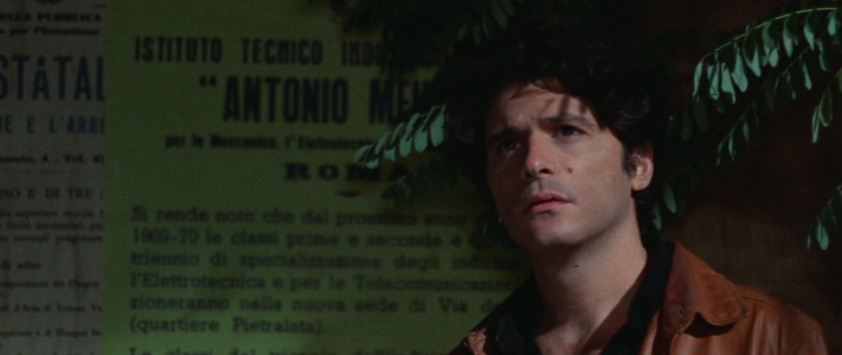
Here we find out that Sam is an American writer living in Italy, but will be returning to the States in two days time with his girlfriend, Julia (played by Suzy Kendall, who would later star in Sergio Martino’s fantastic giallo, “Torso”). On his way home from picking up a cheque from the publishers, Sam walks past the window of an art gallery where he sees two people having a scuffle.
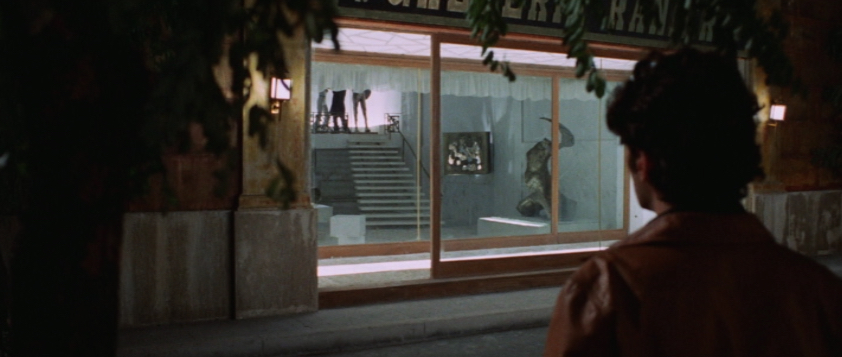
Stunned by what he is witnessing, he stops in the middle of the road, narrowly getting knocked over by a car. We then see that the two figures are a man and a woman and they seem to be jostling with a knife which eventually slashes the woman’s stomach. Sam makes his way over to the front of the gallery, where he becomes trapped between the sliding doors, helpless as the woman cries for help on the floor. Luckily, Sam manages to catch the attention of another passerby who calls the police but while he waits, Sam can only sit and watch as the woman passes out from her wounds.
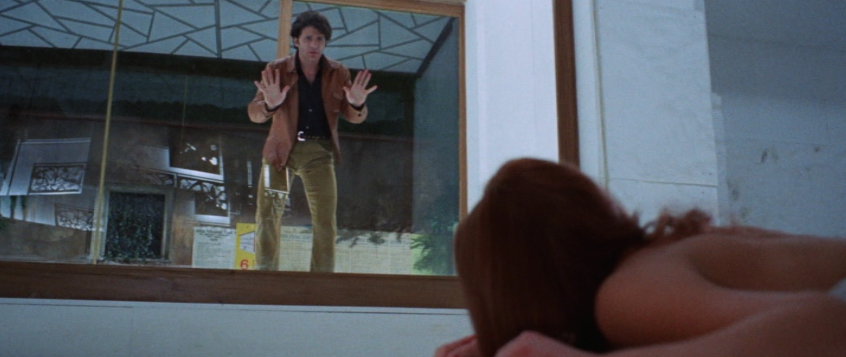
The shots of Sam pressed up against the glass trying to find a way in whilst the woman screams for help are brilliantly done and the scene could be straight out of an Alfred Hitchcock film.
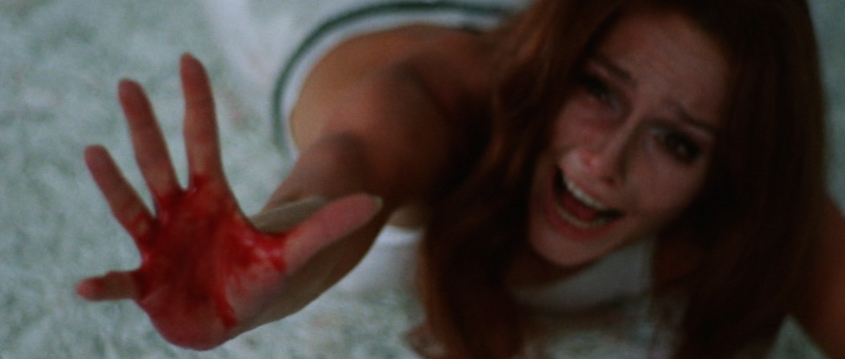
The police and ambulance arrive shortly after and against all odds, the woman is still alive. The police inspector, Morosini (played by Enrico Maria Salerno) begins to question Sam when suddenly the owner of the gallery bursts in, shouting “Monica, Monica!”. The owner is Alberto (played by Umberto Raho) and his wife, Monica, is the woman who has been attacked. The pair drive off in the ambulance leaving the inspector to quiz Sam some more. Sam seems to feel like what he saw wasn’t a random attack, and that there was a deeper motive involved. Inspector Morosini then finds a black leather glove, surely belonging to Monica’s attacker.
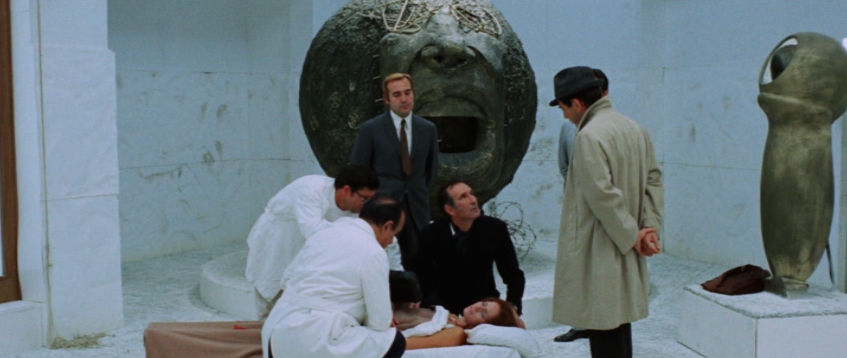
We then cut to the police station where Sam is being questioned again and he is beginning to become agitated by having to go over what he saw repeatedly in the hope it will help him remember what the male figure looked like. Sam mentions that he will be leaving the country in two days time, to which the Inspector confiscates his passport, stating he is too crucial to the case. According to the inspector, what is making it tricky to catch the killer is that he appears, on the surface, totally sane, just like Sam. Morosini then hypothesises that the killer could, in fact, be someone just like Sam, and maybe it was Sam who attacked Monica and then became trapped between the glass doors when he tried to escape. Sam doesn’t respond well to being likened to a serial killer and says “you can’t just grab a foreign citizen and accuse him of murder”. Hate to break it to you Sam but that’s been happening in the States for years, and the UK too for that matter.
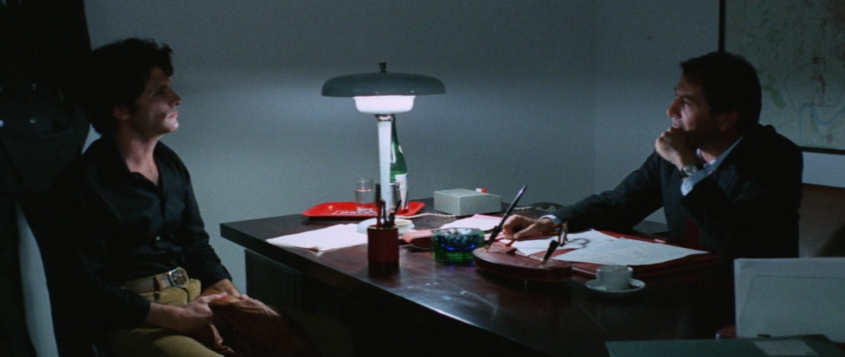
When given the opportunity to make a phone call to the American embassy to contest his entrapment, Sam’s moral compass kicks in and instead calls the airline to cancel his flight so he can continue to help with the investigation. Good lad Sam.
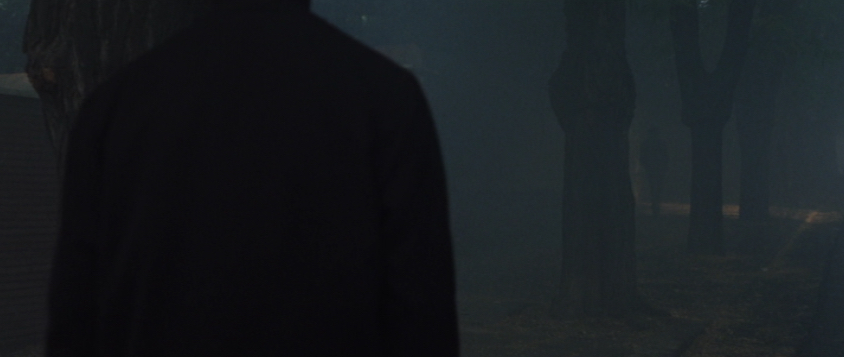
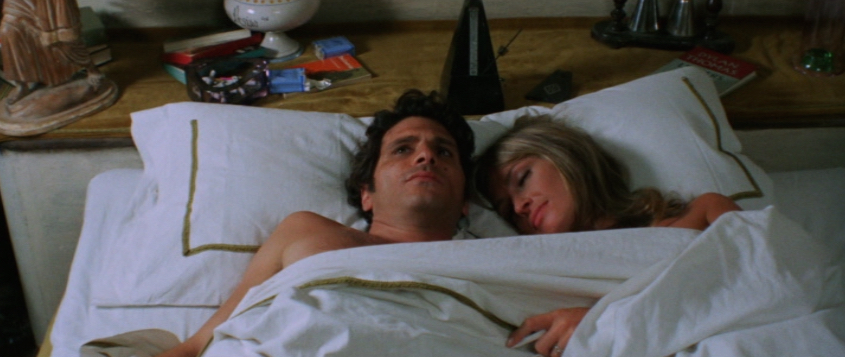
After being released from the police station, Sam walks home through the early morning mist when he begins to feel that he is being followed. He was right, and narrowly avoids a meat cleaver to the face as a mysterious figure tries to attack him and then flees. After a nice little jump scare from an innocent old woman, who was only checking to see if Sam was ok, he finally makes it home. Sam explains the evenings events to his girlfriend, Julia, as she lays in bed but laughs them off, finding them hard to believe. At this point, Sam laughs them off too, possibly out of exhaustion and because unless you are the star of a giallo film, it does sound pretty unbelievable. Sam and Julia make love but he keeps having flashbacks to the attack in the gallery, although he still can’t pin point what it is which seemed odd about what he saw.
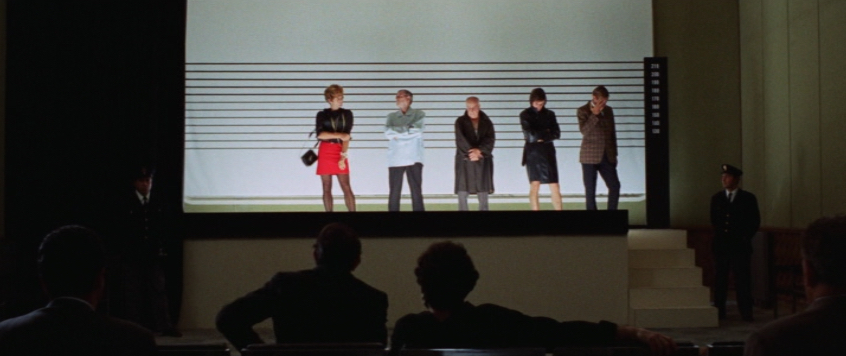
The next day, Sam is back at the police station and is observing a line up. “Bring in the perverts” the inspector barks. It’s a bit of a sweeping statement to assume that a serial killer would also be a pervert but hey ho. The men are slowly called up onto the stage where their convictions are listed off; not that this would be relevant information for Sam to identify the attacker from the previous night. Things get weirder when a man in drag is called up, under the name Ursula Andress. “How many times do I have to tell you! Ursula Andress belongs with the transvestites, not the perverts!” cries Inspector Morosini. Again, it’s even more of a sweeping statement to assume that just because someone is a transvestite, that they would also be a prime suspect for murder. Plus do the police just have a room full of perverts and a room full of transvestites ready at all times for line ups, and someone keeps putting Ursula back with the sexual deviants afterwards for shits and giggles? Predictably, none of the individuals put before Sam fit the bill of the mysterious male figure he saw the previous night at the gallery.
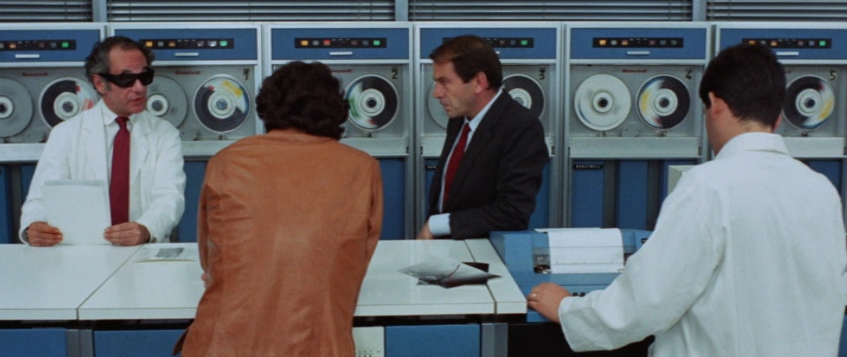
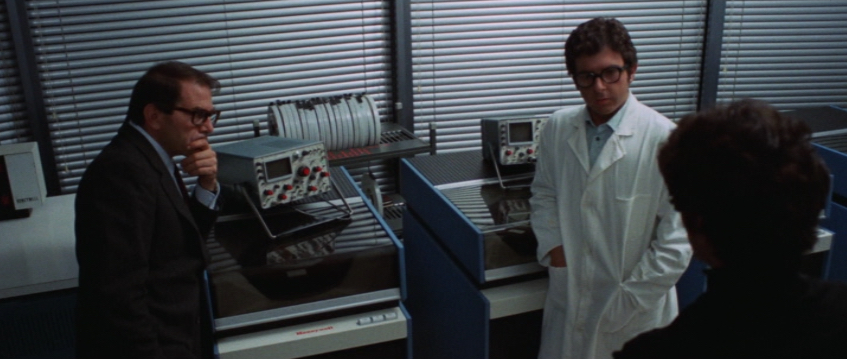
At this stage, I would imagine that normally the police would let a witness go and try other leads, but instead Inspector Morosini seems keen to show Sam every single piece of evidence they have on the case. Sam is taken into a very high-tech room (for 1970 anyway) with lots of reel to reel tapes whirling away in the background where they meet someone in a lab coat (and cataract glasses) talking about how they have fed information into a computer and it has created a profile of what the attacker/murderer might look like, with we are told, an accuracy rate of plus or minus 10%, and statistically could be a fit for around 150,000 people living in the city, which doesn’t seem overly helpful. The fact that this information is virtually useless is confirmed when the inspector says to Sam that it would be nearly impossible gathering alibis for 150,000 people. Good use of time and money then.
Inspector Morosini is still adamant that Sam saw the face of the attacker that night based on nothing more than a good old fashioned policeman’s hunch. Sam however is less than optimistic about his ability to remember and says that despite trying to cast his mind back, he still can’t picture if he saw the attacker’s face. Slightly disheartened by this, the inspector informs Sam that Monica has just come out of hospital and then reads out her address. Firstly, I thought she had nearly died! Surely she wouldn’t have recovered from a serious stab wound already?! Also, I am sure even back then, giving out the address to Sam wouldn’t be legal. I realise this is because the inspector wants Sam to visit Monica to try and get more information but why? Because he is lazy? He is the policeman! A common trope of giallo films is to have a civilian trying to solve the crime in question (similar to Bruno in “A Blade In The Dark”) but this is the police actively getting Sam to do their work for them! Nevertheless, Sam gives a wry smile, understanding what the inspector wants and leaves. I hope they are paying you Sam.
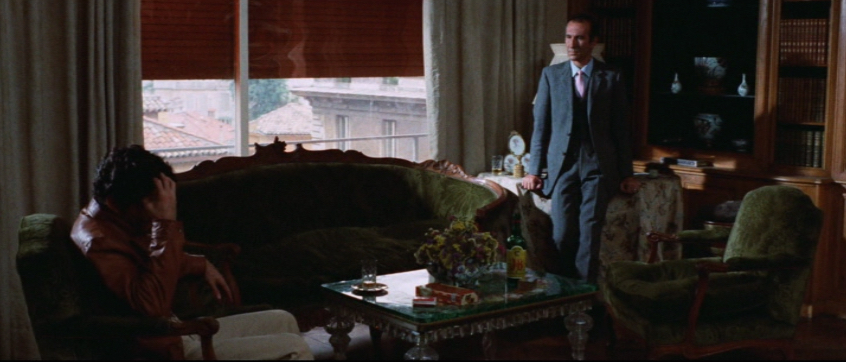
Sam visits Monica’s apartment but is unable to see her as her husband, Alberto, says she is still under sedation. Sam is clearly suspicious about Alberto and asks how tall he is and also notices the brand of cigarettes he smokes. Height wise, he certainly seems a fit when compared to the brief glimpse of the figure we saw attacking Monica in the gallery, and the inspector also said there were traces of tobacco burns on the glove they found. As a viewer, if you didn’t already suspect Alberto upon his arrival at the scene of the crime earlier, you would certainly be led to believe he is suspect number one now after this conversation.
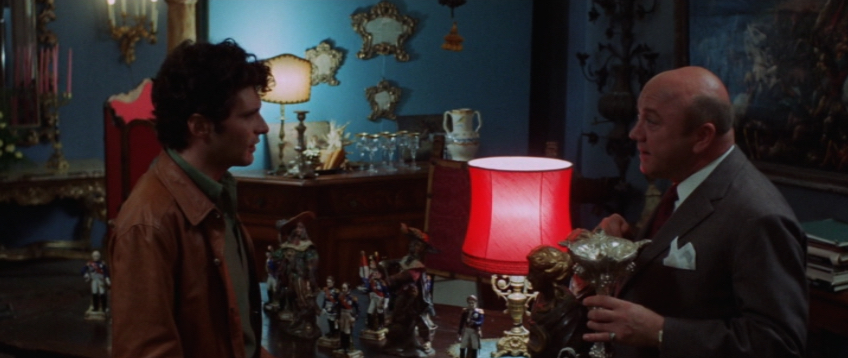
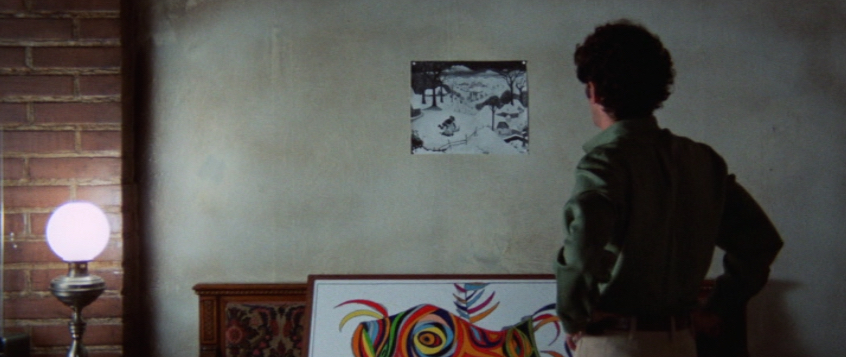
We later see Sam and Julia back at their apartment and they are going through old newspaper clippings and making notes about the three murders to see if there are any clues as to who the killer might be, you know, like the police should. The first murder victim was a woman who worked at an antiques shop and was killed on the way home from work, so Sam heads off to the shop to check it out. There he meets a very flamboyant gentleman who seems very keen to help Sam in his investigations, possibly due to the fact he finds Sam attractive. He tells Sam that the woman in question sold a painting to someone just before leaving the shop the night she was killed and that she was a nice girl, but a bit peculiar as it was rumoured that she preferred the intimate company of women. Oh how times have changed. There is a great sense of irony by this being said by a supposed homosexual man, “I couldn’t care less, I’m no racist for heaven’s sake” he says backing Sam into a corner. Intrigued by the painting that was sold just prior to the woman being murdered, he borrows a copy of it and sticks it to the wall in the apartment, much to Julia’s dismay. The macabre painting shows a woman being stabbed amidst a wintery setting and at this point we also see that the original is hanging in the killers home, pride of place on the wall, as he looks through photos he has taken of his next victim (who gets dispatched in the next scene, in the only murder in the film that could be classed as exploitation).
The next morning, Inspector Morosini asks Sam to join him back at headquarters to try and piece together what he saw one last time, but it turns out to be a fruitless exercise. Admitting defeat, the inspector gives Sam his passport back, but Sam has already decided to stay and try to close the case. The inspector is obviously pleased by this (less work for him I guess) and grants Sam whatever help he needs. Before Inspector Morosini can put his feet up though, he receives a call from the killer, threatening another murder in the next few days. Luckily, they manage to record some of the call, presumably to feed it into the computer so it can tell us it matches around 250,000 individuals in the city.
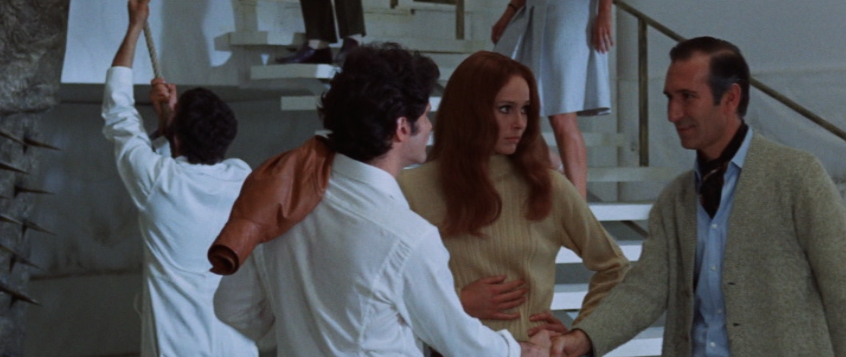
Sam heads over to the art gallery again where he sees Monica and Alberto, installing a new piece of “art”, which looks like something out of “Hellraiser”. Monica thanks Sam again for saving her from the “madman” that night but after some initial pleasantries, her husband seems less than keen for Monica to chat to Sam for too long and calls her up to the balcony to view the awful hell wall from above as the “light catches the points better”.
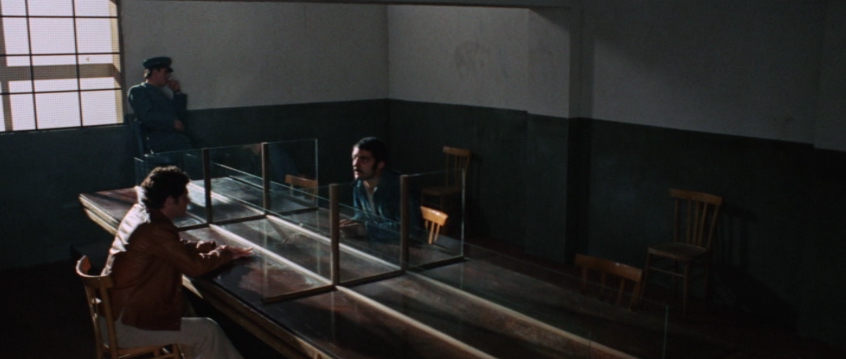
Next on Sam’s list of places to visit is the local prison to see Garullo, the pimp of one of the women killed. Garullo doesn’t really seem like a pimp – not that I have ever met any, or, at least, none I’m aware of. The conversation doesn’t get off to a great start as Sam thinks Garullo’s vocal tick of saying “so long” after a sentence meant he didn’t want to talk anymore when in fact Garullo explains that he stutters if he doesn’t say that. With that awkwardness out the way, Garullo tells Sam that the killer is likely to be a rich gentleman as people involved in his line of work don’t do things like murdering… erm, are you sure mate?
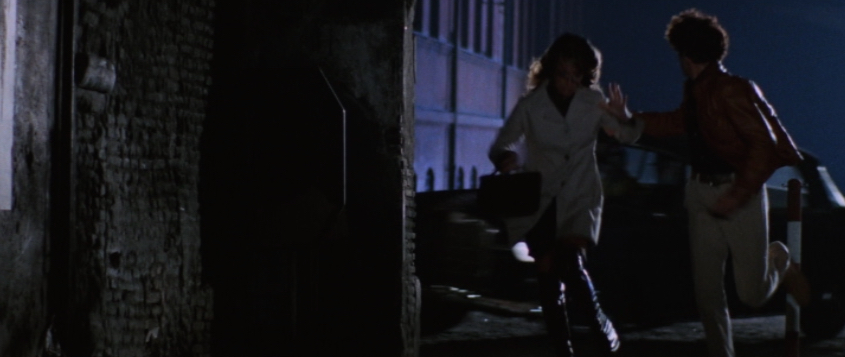
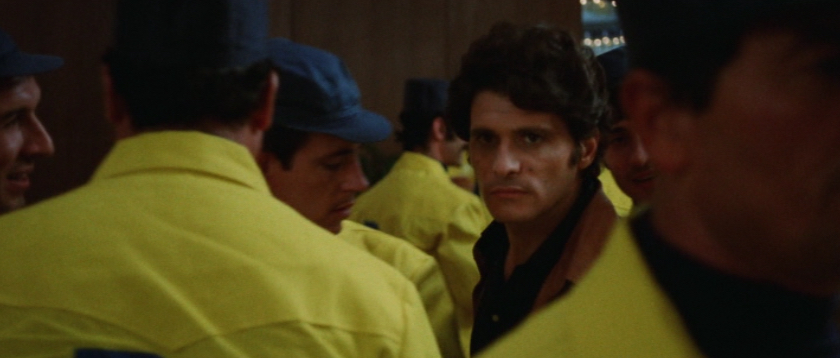
Later that night, Sam and Julia are having a stroll around the deserted streets, accompanied by a bodyguard provided by Inspector Morosini. I say “bodyguard” but what I actually mean is, a middle aged man in a hat. As Sam is openly discussing his amateur police work with Julia, a car comes speeding around the corner, knocking the bodyguard over and then tries to run over Sam and Julia. The pair manage to run away, with the passenger of the car, a man wearing a bright yellow (giallo) “boxing council” jacket, gets out with a gun and runs off after them. Sam manages to get Julia out of the way by hiding her behind a door and then quite an intense chase ensues between Sam and our jacket wearing assailant, which is especially impressive seeing as he looks even older than the bodyguard that was killed moments before. Sam manages to get the upper hand by moving the chase to a busy street, where our geriatric baddie escapes into a hotel function room where the annual “boxing council convention” is being held, full of men wearing exactly the same yellow jacket! What are the chances?! While being a great little scene, it does raise the question, was the jacket man always planning on escaping into that room? Was he going there anyway? Was it total luck? No matter which of these is correct, it still would have been a pretty difficult thing to pull off. What if Sam had run in the other direction? Unable to find his man, Sam leaves the room.
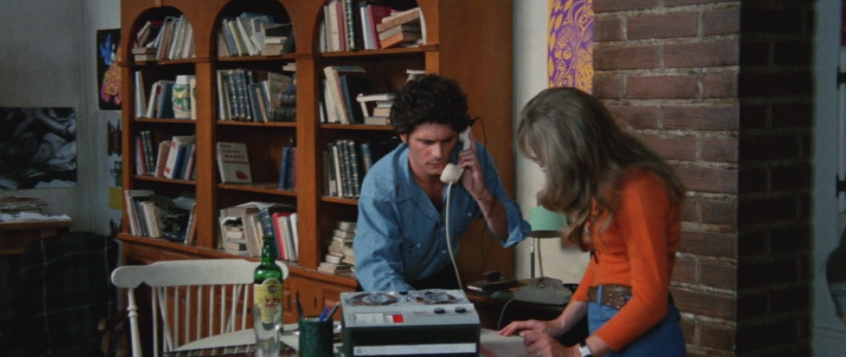
The next day Sam visits “So Long” in prison again, who gives him the contact details for a rather shady character who, in exchange for quite a lot of cash, will try and locate the jacket man so Sam can talk to him to try and gather more evidence. Back at the apartment, the killer calls Sam and threatens to kill Julia if he doesn’t stop his investigations. Again, the phone call is recorded (and given to the police) and this time a vital clue is revealed as a strange, almost industrial sounding, clicking noise is heard in the background.
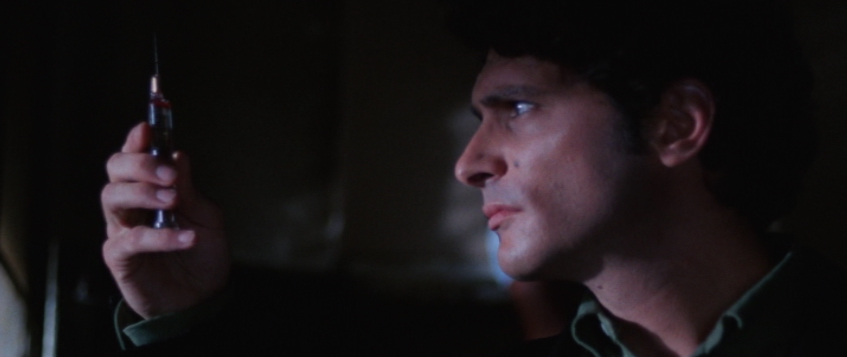
After another trip to the police headquarters, Sam gets a call from So Long’s shady character who tips him off with the address of an ex prize fighter who might have some information. Sam makes his way straight over to the address but finds it empty, or so it seems. Sam takes a look around the gloomy apartment in what is quite a suspenseful scene. He finds an empty hypodermic needle, then finds the apartment owner dead, and we see that he was indeed the man in the yellow jacket who had tried to kill Sam the night before. The reveal is excellently handled and very creepy.
Back at the police laboratory, they have managed to use their expensive computers to actually make a useful discovery. After comparing the recordings of the two phone calls made to Sam and the inspector by the killer, they realise that the voices are different, meaning there could be two killers. They haven’t, however, managed to identify the clicking noise in the background in Sam’s recording which could potentially give away the location of the killer or killers.
Carlo makes a visit to Sam and Julia’s apartment where Sam plays Carlo the recording with the clicking noise. Carlo seems to think he recognises the sound but can’t quite pin point where he has heard it before. Sam and Julia begin “making out” on the bed, in front of Carlo, which is strange, so Carlo takes the recording with him to see if he can jog his memory whilst the pair get down to it. Before things get too steamy, Sam decides it might be worth speaking to the artist of the painting he took from the antique shop. I’m not really sure how or why this would help but I guess at this stage Sam is clutching a straws somewhat, especially as he and Julia are meant to be leaving for the States in 8 hours time, due to the lease on their Italian apartment coming to an end and the property being demolished! Why didn’t he mention that to the inspector when he took Sam’s passport to stop him from leaving the country?! He could have ended up homeless!
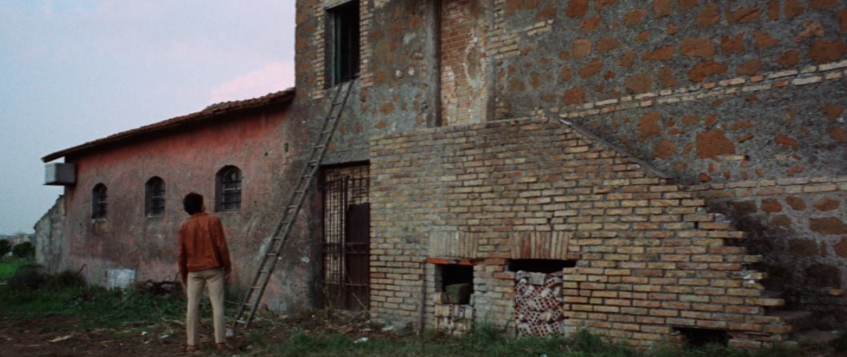
After finding out the name of the artist, Sam makes his way to the nearby town where he lives, despite a warning from a local that the man is very mad and unlikely to be of any use. Sam manages to gain entry to the artists run down house, via a ladder he drops from a top window, under the ruse that he wants to buy a painting for his house.
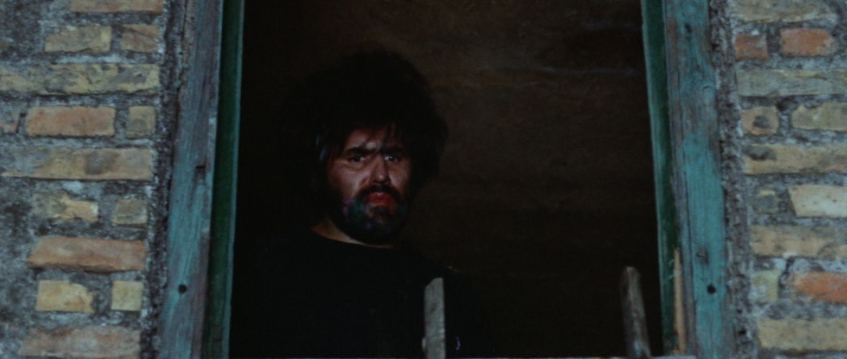
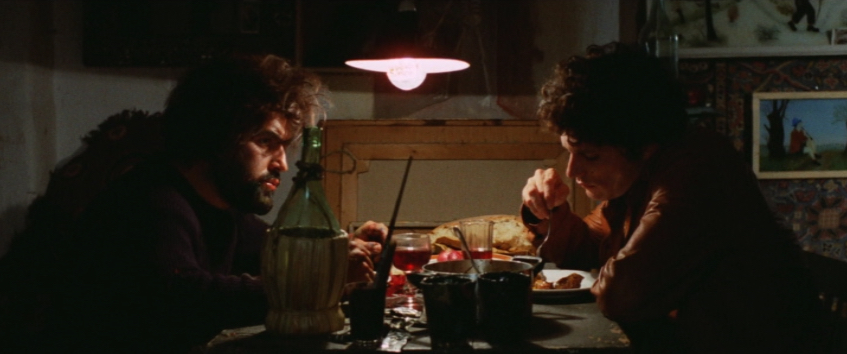
Inside we meet the artist, Berto Consalvi (played by Mario Adorf) who looks like a cross between Henry VIII and Rasputin, and sounds like Stromboli from Disney’s “Pinocchio”, and true to what the local warned, is clearly off his rocker. Berto offers Sam some food as he gives some information about the inspiration for the painting in question, which turns out to be based on an actual attack on a woman years before. After lunch, Berto goes to get Sam a painting to purchase when a cat suddenly runs out from the next room. Berto catches the cat and returns it to a cage with some other cats. Quite rightly Sam asks why he keeps cats in a cage to which Berto casually replies “the less they move, the fatter they get”. After realising that what he has just eaten was indeed, a cat, Sam leaves without buying the painting.
Back at Sam’s apartment, we see Julia getting ready for Sam’s arrival so they can catch their plane when she hears a noise outside the door. She opens it, expecting to see her lover but instead sees a shadowy figure walking towards her. She screams, runs back inside and tries to use the telephone, just as the mysterious figure cuts the wire. “You will not leave this house alive” whispers a voice from outside the front door as Julia makes sure it is locked shut before trying to escape through the bathroom window, only to find it has bars on the outside. How did she not know that already? We are led to believe she has lived there a while; have they not had to air the bathroom out after a steamy shower or a massive shit?
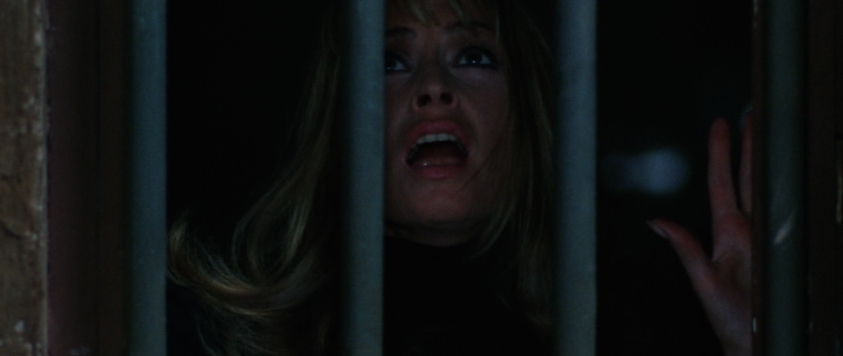
Julia breaks down and sobs as the figure begins to carve a hole in the wooden door with a knife until Sam is heard calling her name. With this, the unwanted visitor flees and Julia passes out. The next day, Julia awakes to find that they had obviously missed their flight and that the police were unable to catch the suspect, despite the fact we were told earlier there were two policeman guarding the outside of the apartment block. Carlo arrives at the front door (strange, if Sam and Julia had got their flight then they wouldn’t have been there and surely Carlo would have been privy to this?) as he has worked out what the clicking noise in the background of the telephone call recording is. Carlo informs the pair that he thinks it is the sound of a magnificent bird, called Hornitus Nivalis, which has long white feathers which look like glass. Now, I’m no ornithologist, and admittedly I only did a crude Google image search, but the Hornitus Nivalis looks like quite a small bird, with white wings that look nothing like glass. Carlo informs Sam that despite being a very rare bird and native to Siberia, there is in fact one being kept in captivity in Italy at a nearby zoo! What are the chances?!
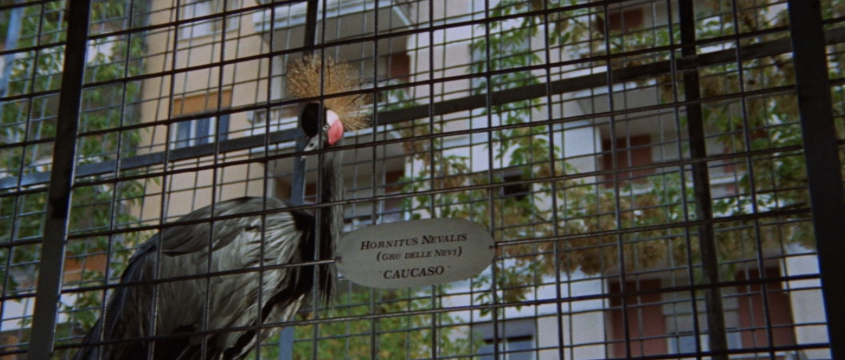
Sam, Julia and Carlo make their way to the zoo and find where the bird is being housed. The bird’s feathers look nothing like glass but it’s a beautiful bird all the same and sure enough, it is making the sound just like from the telephone call recording. Sam looks up and realises that Monica’s apartment is right next to the bird’s enclosure and just as he informs Julia and Carlo, they hear a scream coming from the window.
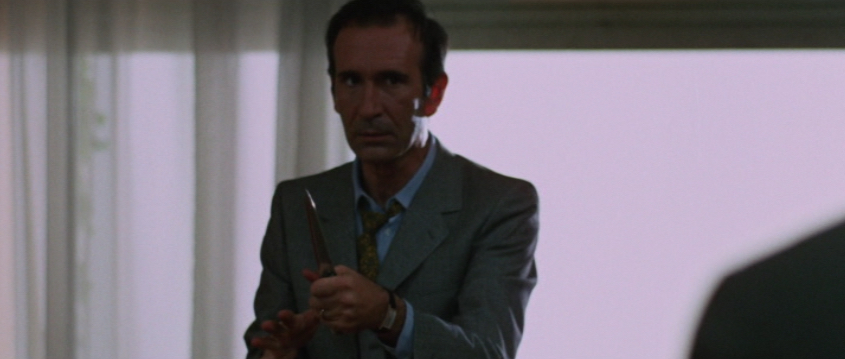
Upon bursting through the door, Sam finds Monica and Alberto fighting over a knife. Monica manages to break away and takes refuge next to Sam as Alberto backs closer to the window with the knife in hand telling everyone to stay back. A struggle ensures and Alberto ends up falling out the window. As he lays on the pavement surrounded by the police and ambulance crew, he confesses to all the murders and states his wife tried to stop him before passing away.
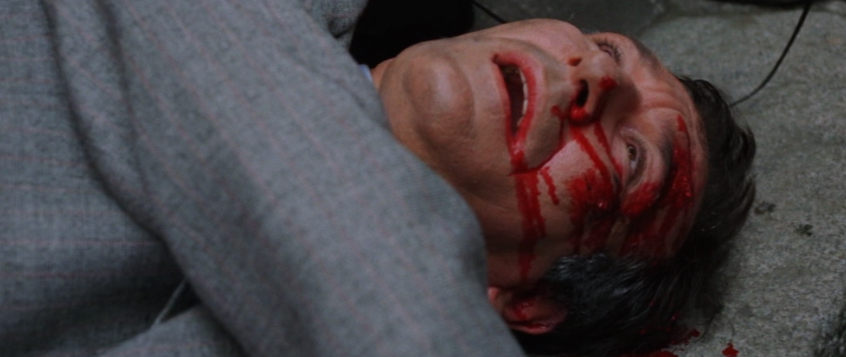
As the press begin to arrive and Alberto’s body is taken away, Sam wanders through the crowds to try and find Julia, who along with Monica and Carlo, seems to have disappeared. After speaking to some of the locals, Sam makes his way into a dark apartment where, he has been told, Julia had been seen entering. Sam creeps into the apartment, trying in vain to find a working light but alas, it seems the power has been cut. As Sam slowly opens the blinds, the fading light from outside the window lights up the painting, sold by the first victim, hanging on the wall.
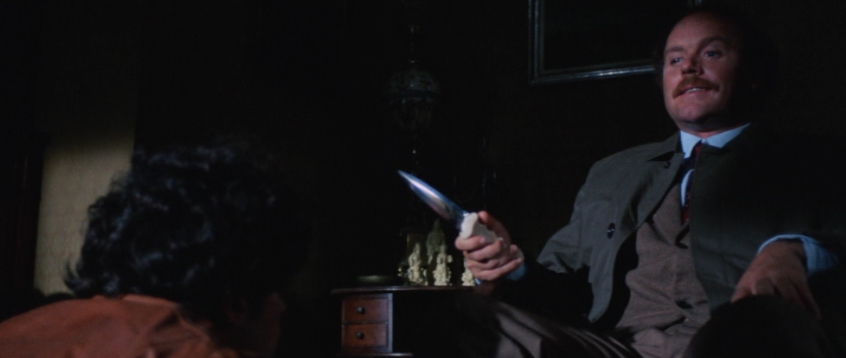
Sam then sees the light reflecting on a blade from the other side of the room. It is Carlo, sat in a chair, smiling and holding a knife. Sam grabs Carlo, only to find he is dead, stabbed in the back and had been set down in the chair as a red herring. Then, suddenly from the darkest corner of the room, the faint sound of laughing can be heard which gets louder and louder as a figure walks into the centre of the room. It’s Monica and as she laughs hysterically, Sam realises that what he in fact saw that night at the art gallery was not Monica being attacked by a man, but Monica attempting to kill her husband, Alberto, and Sam had interrupted her attack.
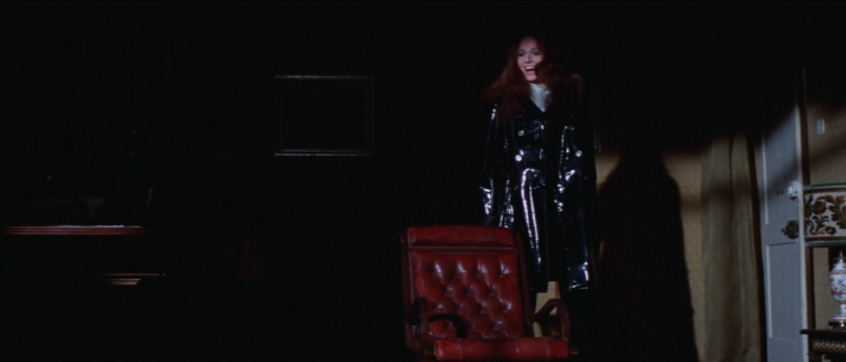
Monica runs out the room, locking Sam inside. Watching her escape route from the window, Sam manages to climb out of the apartment and follows her into another dark room. Suddenly the lights come on, revealing Sam is in the art gallery on the ground floor. As Sam turns around, he sees Monica cutting the rope holding the “Hellraiser” art wall which then collapses on top of him, trapping him between it and the floor.
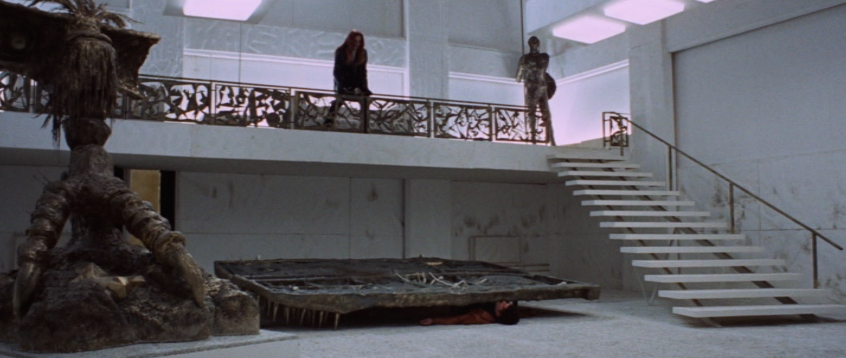
Monica makes her way down the stairs and begins taunting Sam with a knife. Just as she is about to stab Sam, Inspector Morosini karate chops her on the back of the neck which incapacitates her, leaving the Inspector and some other policemen able to lift the art piece off of Sam. As Monica is taken away, the inspector informs Sam that they have found Julia and she hasn’t been badly harmed.
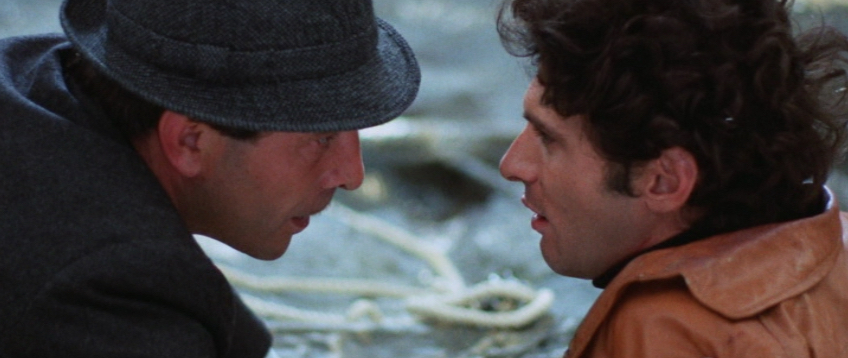
We then cut to the recording of a television programme where Inspector Morosini is being interviewed. Alberto, it seems, loved his wife very dearly, despite her clearly being insane and was trying his hardest to ensure no harm came to her (never mind all the innocent people she’s murdering hey Alberto?). But what was Monica’s reason for killing all those people I hear you ask? Well, it turns out that ten years ago she was victim of an attack, the attack which became the basis for Berto’s painting. Monica had buried the trauma of the attack for years but upon seeing the painting, her mental disturbances were brought to the forefront and instead of identifying herself as the victim of the painting, she saw herself as the killer, thus igniting her psychotic behaviour. The film ends with Sam and Julia flying back to the States, all happy and smiling, and thus depriving Italy of the best detective they ever had.
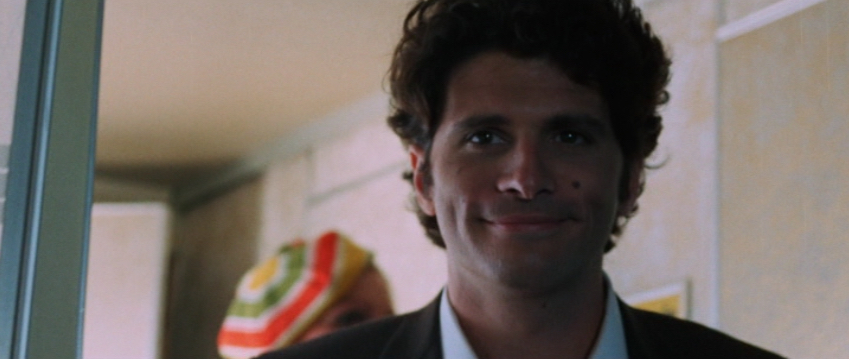
“The Bird With The Crystal Plumage” is a very good film and whilst it feels like I’ve been picking holes in it, these things are minor issues, if issues at all, and doesn’t take away from the fact it is a well made thriller with plenty to enjoy. Tony Musante is excellent as Sam, and it is his screen presence and likability that makes Sam so watchable and engaging. I don’t think Tony Musante gets enough praise for his role in this film, so Tony, I salute you!
The film is beautifully shot, but that shouldn’t be a huge surprise, it is Argento after all. Ennio Morricone’s score works well, especially in the more intense scenes but is a little forgettable when compared to some of his other work.
The story is intriguing and whilst the conclusion works, I do prefer my giallo films to have a slightly whacker reveal or killer motive at the end. “The Bird With The Crystal Plumage” is a giallo film you could watch with your mum, but seeing as I have seen Alfred Hitchcock’s “Psycho” at the cinema with my mum, maybe I’m not the best to pass judgement on that! Either way, I would recommend checking it out.

 Si's Homepage Of Horror
thank you so much for this. loved it 🙂
LikeLike